An office copier service contract should reduce downtime and make operating cost more predictable. It should not require a detective to determine what happens when the copier stops on a busy Monday morning.
Separate the service decision from the equipment excitement. Whether you are evaluating Canon, Xerox, Ricoh, Konica Minolta, HP, Sharp or Kyocera options, compare support terms using the same checklist and the same expected volume.
1. Covered equipment
Record the exact model, serial number and accessories covered. Feeders, finishers and external print controllers may require explicit inclusion. If several devices are grouped under one agreement, confirm how additions and removals are handled.
2. Labor and travel
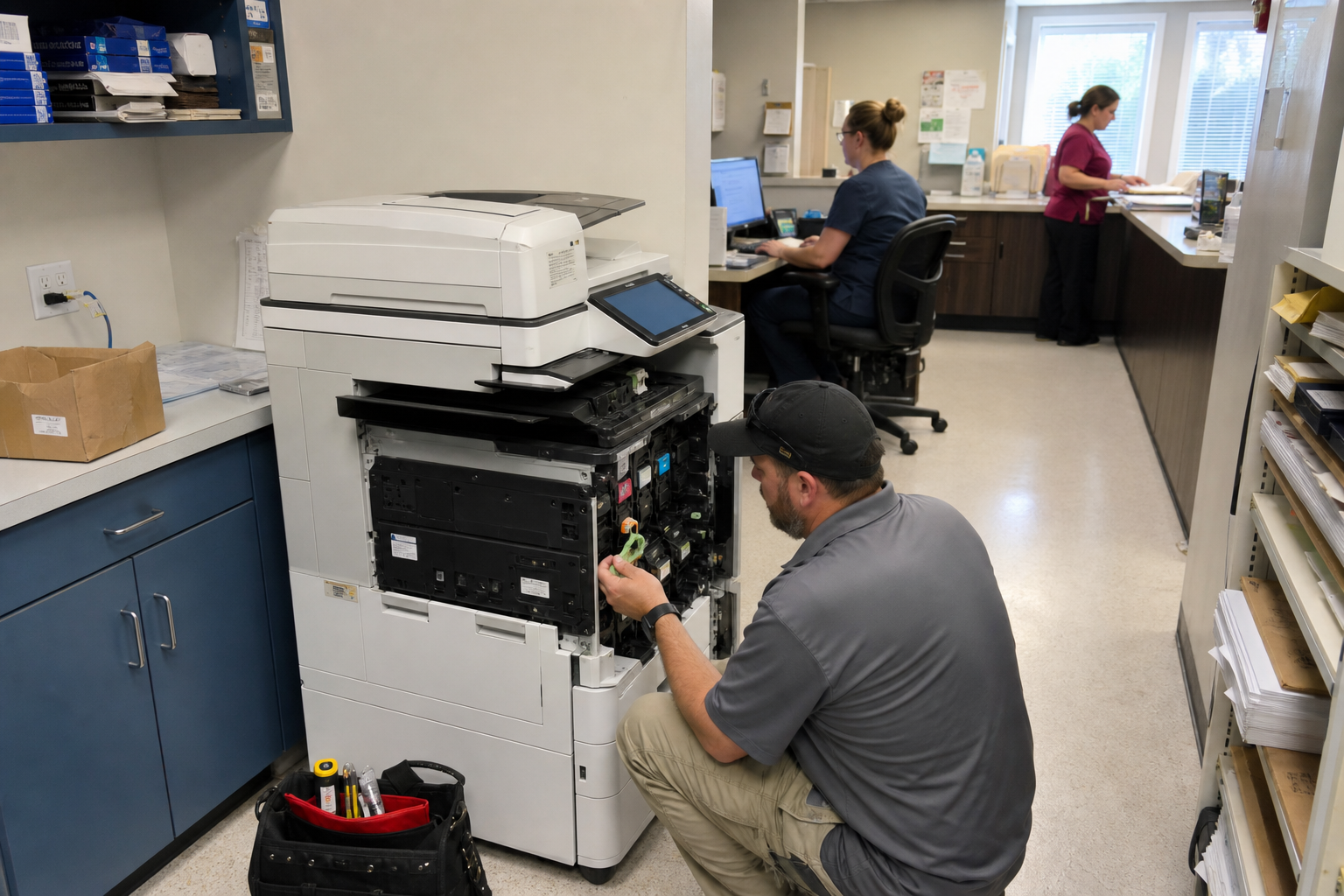
Confirm whether onsite labor, travel and diagnostic time are included. Ask about after-hours visits, remote locations and charges for a call that the provider classifies as user error.
3. Parts and consumables
Identify coverage for toner, drums, developer units, fusers, transfer components and maintenance kits. Paper and staples are commonly excluded. Avoid vague “all supplies included” language when the exclusions are not listed.
4. Black-and-white and color page rates
Document the starting rates, included allowances and how impressions are counted. Determine how mixed-color pages, large sheets and duplex pages are treated. Use actual meter history when comparing copier pricing proposals.
5. Rate increases
Look for the timing and limit of annual increases. A low initial per-page rate can change the economics if increases are uncapped or poorly defined.
6. Response target
“Prompt service” is not measurable. Ask whether the provider commits to a response time, an onsite arrival time or only an initial phone call. Clarify business hours and how priority is assigned.
7. Escalation and unresolved problems
Know whom to contact when a device fails repeatedly. A credible provider should have an escalation path, access to advanced technical support and a method for tracking chronic issues.
8. Preventive maintenance
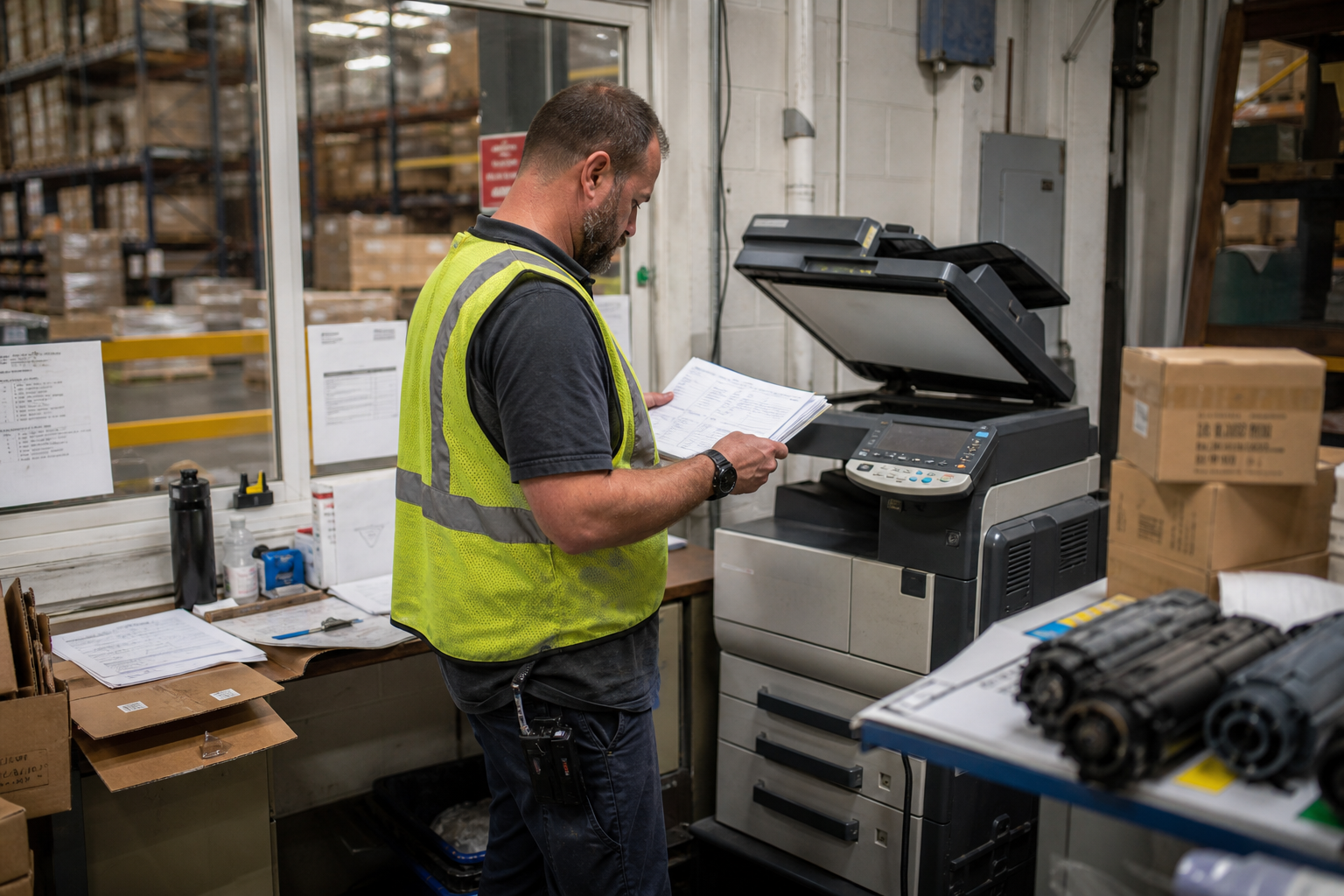
Some work is triggered by meter intervals or device alerts; other work happens during service calls. Ask how preventive tasks are scheduled and documented. Maintenance should reflect workload and environment, especially in dusty warehouse or production settings.
9. Toner replenishment
Automatic toner shipping is convenient only when delivery timing and inventory are controlled. Confirm how the system detects need, who receives alerts and what happens when a shipment is delayed. Avoid accumulating expensive supplies that do not match the installed device.
10. Network and workflow support
Mechanical service may not include print servers, scan destinations, address books, authentication or third-party software. Define the boundary between the copier dealer and internal IT so problems do not bounce between teams.
11. Agreement length and cancellation
The service term may differ from the equipment lease. Review renewal, notice and cancellation provisions independently. Consider what happens if the equipment is replaced, relocated or consistently fails to meet requirements.
12. Service coverage by location
Organizations with multiple offices need consistent support beyond the headquarters ZIP code. Verify technician coverage and parts availability in each relevant office copier service area.
How to evaluate a dealer’s answers
Good answers are specific and written. Ask for a sample invoice, escalation contact, exclusions and the method used to report meter readings. References from organizations with similar equipment and volume can reveal more than a generic testimonial.
Frequently asked questions
Does a copier service contract include toner?
Many do, but not all. Confirm toner, shipping, waste containers and any yield or coverage assumptions in writing.
Are copier repairs free under a service agreement?
Covered repairs may have no separate labor or parts charge, but exclusions can apply to damage, misuse, relocation, network work or unsupported media.
What is a reasonable service response time?
It depends on location, device criticality and the agreement. Focus on a clear measurable commitment and an escalation process rather than an unsupported promise.
Can service be purchased without leasing the copier?
Often yes. Purchased and eligible refurbished equipment can frequently be placed under a separate maintenance agreement after inspection.