
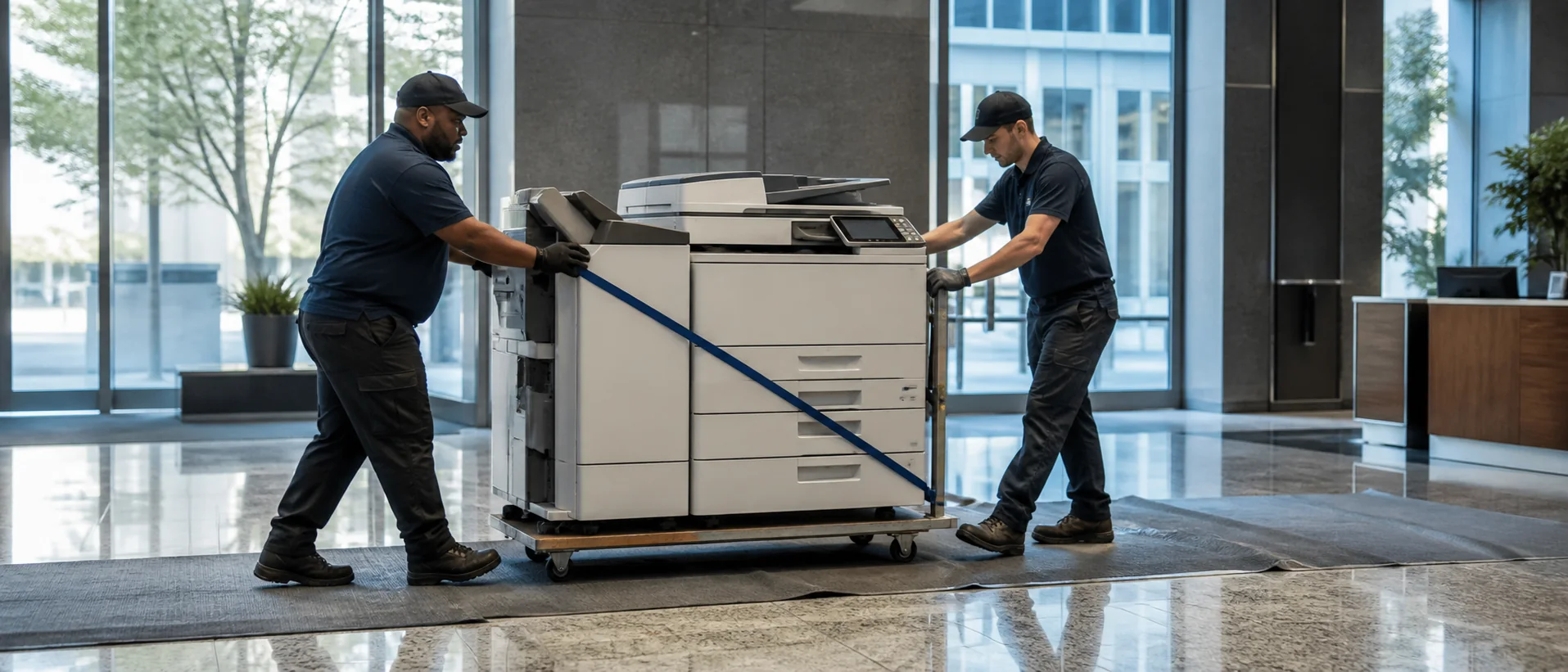
Santa Clara copiers for sale should be evaluated beside lease offers using the same Silicon Valley technology, campus and event workload. Semiconductor and high-tech companies, professional and scientific services, manufacturers, finance, healthcare, universities, hospitality and major venues all create specialized records and sharp demand peaks. A useful quote identifies each workflow and controlled destination, then prices exact hardware, software and Santa Clara support.
Build a Santa Clara copier requirement for technical campuses
Gather meters, service history and sample files from engineering, quality, legal, finance, clinical, education and event teams. Include controlled diagrams, supplier packets, contracts, mixed-size scans, presentations, credentials and confidential employee pages. Record manual document steps and desktop output that hide when the shared device cannot finish the real task.
The A3 versus A4 copier guide helps determine whether large technical originals, paper capacity and finishing justify a full-size device. Require exact controller, feeder, trays, finisher and licenses. Test normal files from their source through authenticated, searchable retrieval.
Corporate campuses, industrial sites, university buildings and venues have different delivery and security rules. Facilities, IT and an operating user should approve placement and workflow. Event teams should include the short, intense production windows that an average monthly meter cannot represent.
Normalize Santa Clara copier costs and technology subscriptions
Separate hardware price, lease total, maintenance base, included pages, overages, software, installation and training. Add annual escalators, taxes, relocation, sanitization and return freight. The commercial copier cost guide prevents a required integration or finishing option from disappearing inside a low payment.
Model ordinary demand and product, audit, academic, conference or stadium-event peaks. Ask how pages are pooled among Silicon Valley sites and whether devices can be moved or removed as teams change. Compare purchase and lease over the same useful life, including every recurring license.
Require sample invoices by asset and campus. Keep the accepted equipment schedule, serials, subscription owners and notice dates in one record. Quarterly utilization and ticket reviews can identify capacity or reliability issues while the configuration can still be corrected.
Secure Santa Clara technical records and deadline continuity
IT should test secure queues, user identity, OCR, mixed originals and approved destinations. Review encryption, firmware ownership, administrator roles, logs and data removal. The document-management copier guide helps define end-to-end acceptance.
Ask where technicians and parts are based, how secured sites grant entry and who coordinates an issue across device, identity and records systems. Define supported alternate output for engineering, legal, payroll or event documents that cannot wait.
References should have a similar campus or integration burden. Ask when users could complete the whole workflow and what prevented recurrence. After launch, review successful scans, tickets, page costs and workarounds, then retain known-good test files before any firmware, driver or identity change.
Keep the accepted destination map and access approvals with the asset record so a replacement unit can be validated without rebuilding the workflow from memory.
Compare Santa Clara copier prices on the exact proposed workflow.
Compare one complete equipment, workflow and service requirement.