
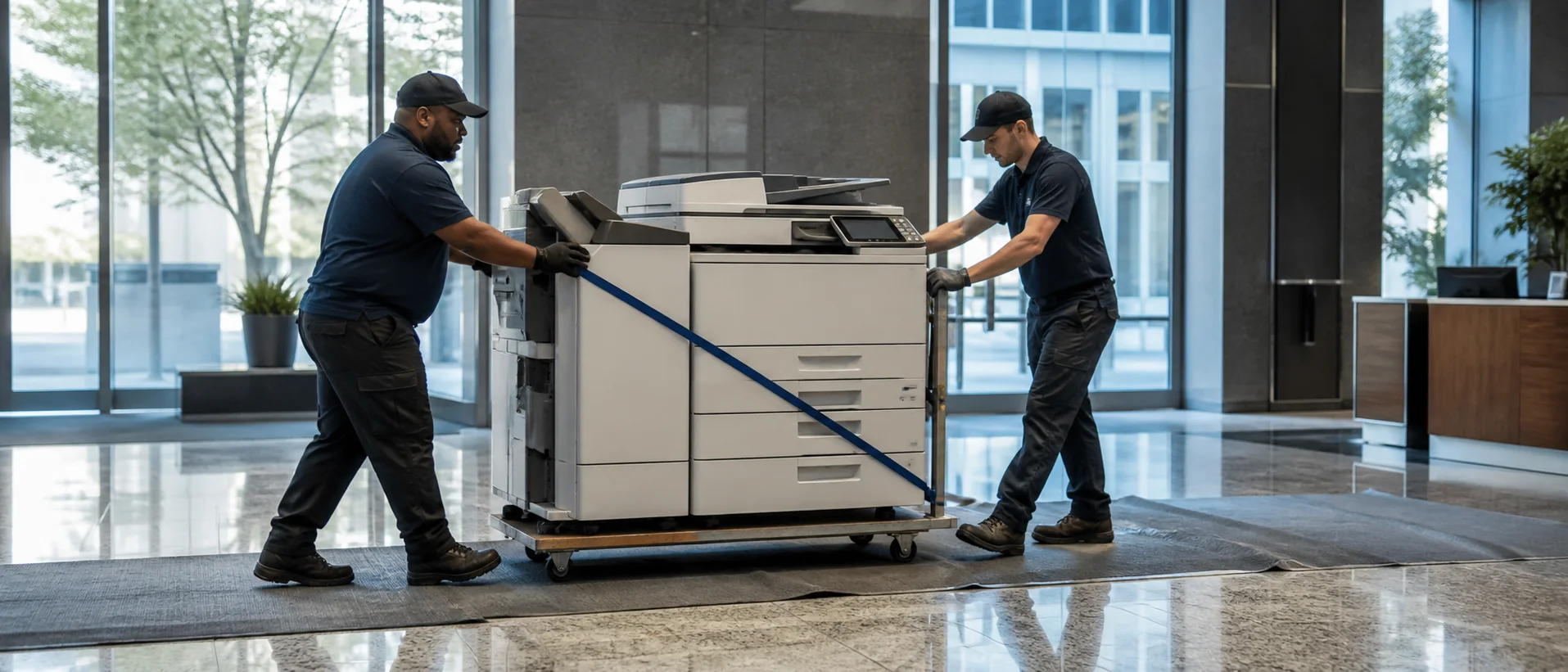
Torrance office copier dealer proposals should account for the city’s advanced manufacturing, aerospace and defense, automotive research, medical-device and pharmaceutical companies, hospitals, hospitality, retail and international corporate offices. Technical, clinical and customer records place different demands on one fleet. A disciplined Torrance request defines actual documents, secure destinations, exact equipment and South Bay support before prices are compared.
Specify Torrance copier performance for technical and clinical work
Collect meters, tickets and files from engineering, quality, clinical, legal, finance, production and administration. Include controlled diagrams, test records, labels, contracts, patient forms, mixed-size scans and color customer material. Record long feeder jobs and work diverted during equipment or integration failures.
The A3 versus A4 copier guide helps determine whether larger technical originals and finishing justify a full-size system. Require exact controller, feeder, trays, finisher and software. Test a representative technical or clinical packet through approved retrieval.
Industrial, hospital, corporate and hotel properties may each impose different loading, escort and operating rules. Facilities and IT should map delivery, placement, power and network. Include a production or clinical user in acceptance so the device is judged on deadline work.
Compare Torrance copier leasing and complete operating cost
Separate hardware price, lease total, service base, pages, overages, subscriptions, installation and training. Add annual escalators, taxes, travel, sanitization and return freight. The office copier cost guide keeps missing workflow options visible.
Model ordinary demand and production, clinical, audit or visitor peaks. Ask whether pages can be pooled across South Bay locations and whether secured facilities have different service terms. Compare lease and purchase over the same useful life.
Require sample invoices by asset and address. Store serials, accepted options, software owners and notice dates together. Quarterly meter and ticket review should expose an oversized, overloaded or unreliable device while correction is possible.
Secure Torrance records and protect production continuity
IT should test identity, secure queues, OCR and approved destinations. Review encryption, administrator roles, firmware, logging and data removal. The office copier security checklist supports engineering and healthcare review.
Ask where South Bay technicians and parts are based, how controlled sites grant access and who owns a repeated fault. Define alternate output for quality, patient, shipping, payroll or client documents.
References should have comparable technical or clinical demands. Ask when users could complete the whole workflow and what prevented recurrence. After launch, review successful scans, ticket history and workarounds, then preserve known-good test files for future updates.
Technical and clinical teams should preserve a small set of approved test documents and expected output. Reuse them after firmware, driver, identity or destination changes so an apparently minor update does not interrupt a controlled record process.
Include facilities, IT and the operating team in the first service review. Their combined evidence can distinguish hardware failure from paper, environment, permissions or training.
Keep the final recovery steps with each asset.
Compare Torrance copier prices on the exact workload.
Compare one complete equipment, workflow and service requirement.