
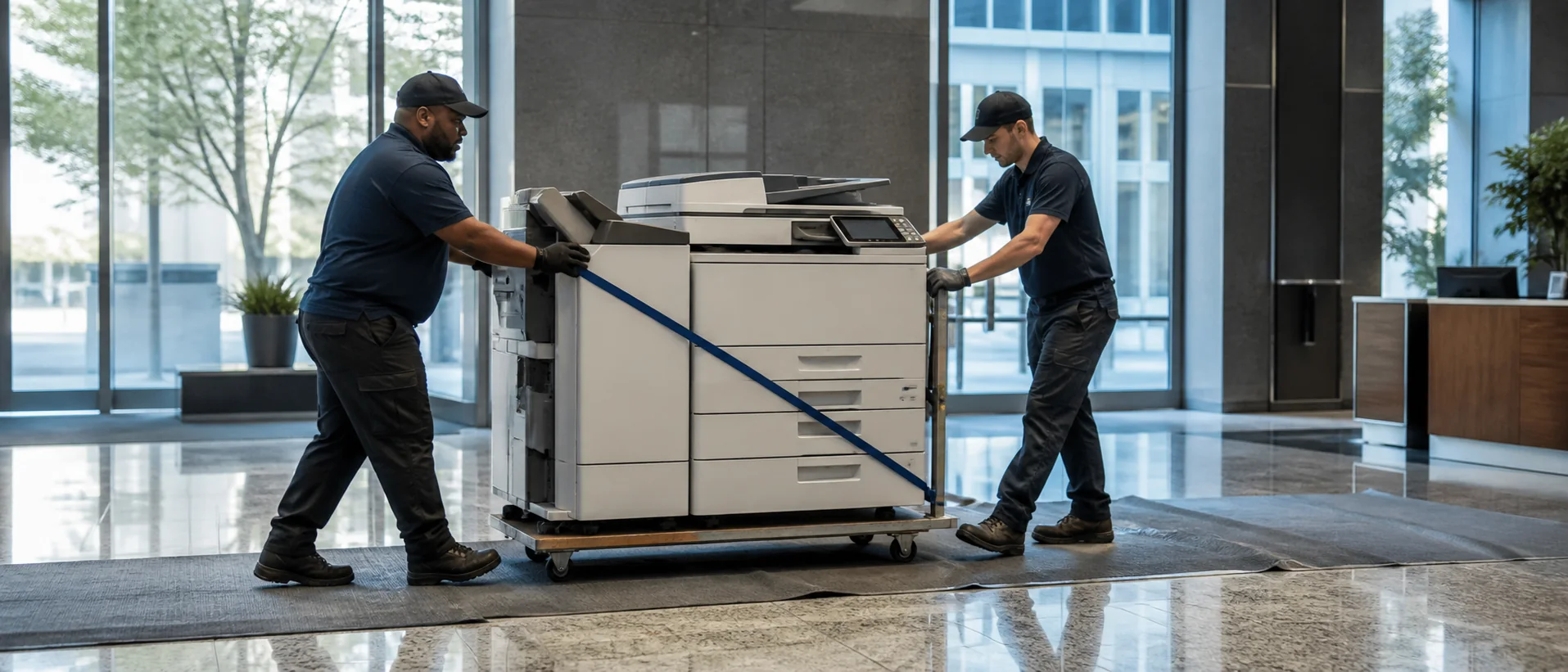
Tracy copiers for lease should be compared against purchase options using the same logistics, industrial and office requirement. Tracy’s position near I-205, I-580, I-5 and rail supports distribution, manufacturing, food and agriculture, healthcare, technology, retail, public and professional workplaces. A useful quote accounts for shift demand and every site, then identifies the exact equipment, charges and San Joaquin County service route.
Build a Tracy copier requirement for logistics and growing offices
Gather meters, service records and actual files from shipping, receiving, quality, finance, clinical and administrative teams. Include bills of lading, labels, work orders, invoices, mixed-size scans and confidential employee pages. Record desktop printing and manual workarounds used when a shared copier cannot complete a shift-critical task.
Use the copier speed guide to connect shift changes and shipping peaks to feeder, processor and paper capacity. Require exact model, controller, trays, finisher and licenses. Test a normal receiving or compliance packet through approved retrieval.
Warehouse, manufacturing and medical locations can have different loading, environmental and security conditions. Facilities, IT and an operating supervisor should approve placement and workflow. New or expanding sites should document expected headcount separately from current volume.
Compare Tracy copier prices through growth and peak demand
Separate cash price, lease total, service base, included pages, overages, software, setup and training. Add annual increases, taxes, travel, relocation, sanitization and return freight. Review copier leasing versus buying with one configuration and realistic useful life.
Model ordinary demand and shipping, inventory, production or year-end peaks. Ask whether pages can be pooled among Tracy and regional sites and how a new address is added. The commercial copier price guide exposes differences hidden in monthly bundles.
Require a sample invoice by device and location. Keep serials, approved options, subscriptions and notice dates with the contract. Review utilization and tickets after the first major peak and when another facility opens.
Protect Tracy operating records and shift continuity
IT should test authentication, secure release, OCR, mixed originals and approved destinations. Review encryption, administrator roles, firmware and sanitization. The copier service contract guide helps define written recovery.
Ask which technicians cover Tracy, where parts are stocked and how evening shifts obtain support. Define alternate output for shipping, quality, patient or payroll documents. The plan should name the access contact and escalation owner.
References should share similar growth or operating hours. Ask when the full workflow returned and whether the repair held through the next peak. After implementation, review tickets, successful scans and workarounds, then keep corrected settings for future sites.
Keep a concise continuity sheet at each shift location naming priority documents, the access contact and the supported alternate device. Supervisors should be able to follow it without searching the full contract.
Include shift leaders in the first service review so paper, placement and training problems are not mistaken for hardware faults.
Request Tracy copier prices for the full regional requirement.
Compare one complete equipment, workflow and service requirement.