
Lakewood office copier dealer quotes should be based on the records handled by federal and public offices, healthcare providers, engineering and technical firms, education, finance, retail headquarters, nonprofits and other west-metro workplaces. Secure scanning and integration may matter more than raw print speed in one department, while a field or client team may need dependable color and finishing. Put those differences in one written brief before comparing models, leases or Jefferson County service.
Specify Lakewood copiers for secure west-metro work
Collect meters, ticket history and representative documents from public, technical, clinical, finance, legal and administrative users. Include reports, permits, plan pages, patient forms, contracts, mixed-size scans, color client material and confidential personnel files. Record desktop devices and outsourced work that the central copier does not capture.
The office copier sizing guide connects real batches and peak timing to an appropriate equipment class. Require the exact feeder, controller, trays, finisher and licenses. Demonstrate a normal technical or records packet through searchable text and its approved destination.
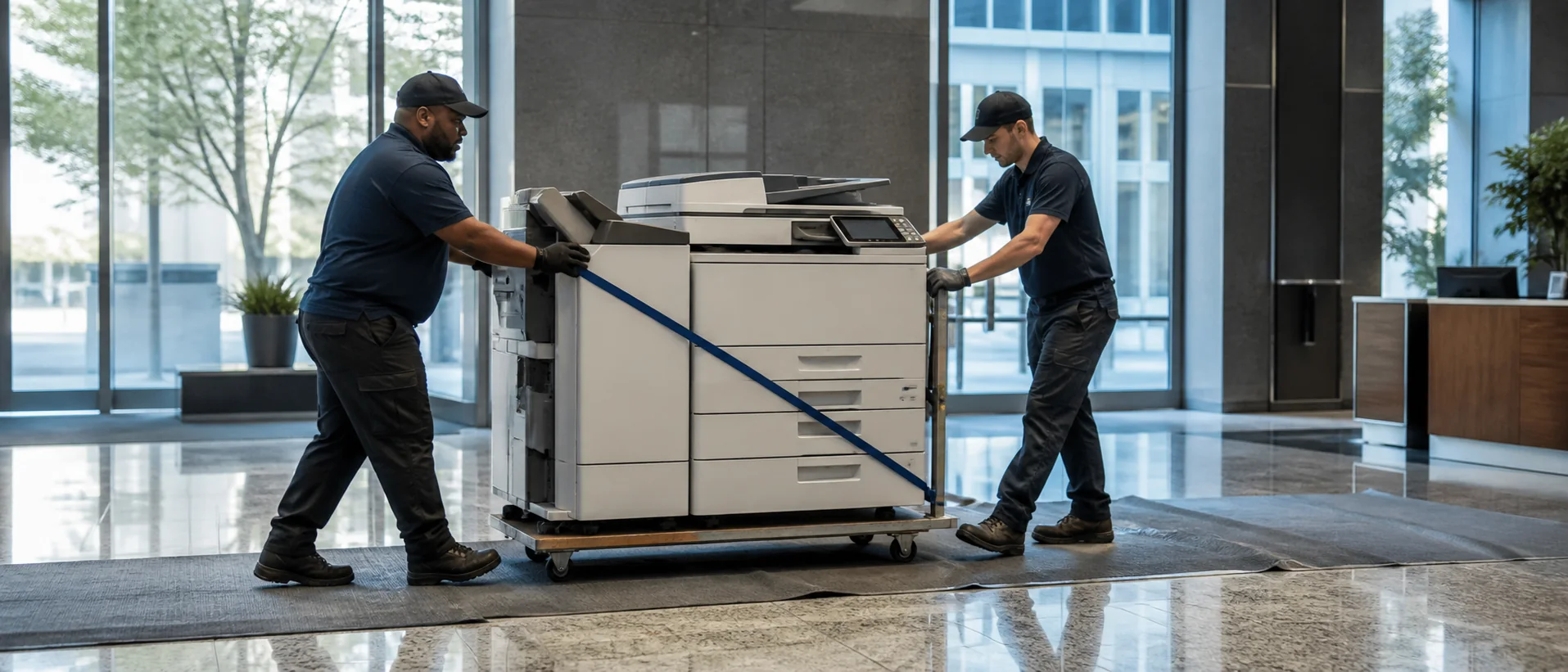
Federal campuses, medical offices, government buildings and multistory business properties can require advance delivery and technician access. Facilities, security and IT should verify the route, power, network and acceptance steps. A daily user should confirm paper handling and retrieval before sign-off.
Compare Lakewood copier pricing, leasing and metro changes
Request equipment price, lease total, service base, included pages, overages, supplies, software, implementation and training as separate lines. Add annual escalators, taxes, access charges, relocation, sanitization and return freight. The office copier pricing authority guide makes differently bundled offers comparable.
Model ordinary demand and regulatory, clinical, project, audit or year-end peaks. Ask how a move between Lakewood and another Denver-area office affects financing and service and whether pages can be pooled. Review copier lease versus buy with identical equipment and useful-life assumptions.
Require a sample invoice by device and address. Keep serials, accepted options, subscriptions, page minimums and notice dates in one record. Review utilization and service history quarterly so consolidation or hybrid work can be reflected before renewal.
Protect Lakewood information and define integration ownership
IT should test secure queues, authentication, OCR and approved network or cloud repositories. Review encryption, administrator privileges, firmware, logs and data removal. The copier security guide supports public, clinical and technical information.
Ask which technicians serve each Lakewood building, how controlled access works and who owns a fault spanning the copier, identity provider and repository. Define alternate output for public, legal, patient, payroll or project documents. Restoration should mean users can complete the process again.
References should share similar access or integration requirements. Ask how repeated faults were escalated and whether invoice and supply reporting remained accurate. Preserve accepted test files and a continuity sheet with the asset record for use after driver, firmware or identity changes.
At the first service review, include records owners and frequent operators. Their experience can expose failed searches, permissions and paper changes that do not appear in the device uptime number.
Compare Lakewood copier prices on the exact configuration required.
Compare one complete equipment, workflow and service requirement.