
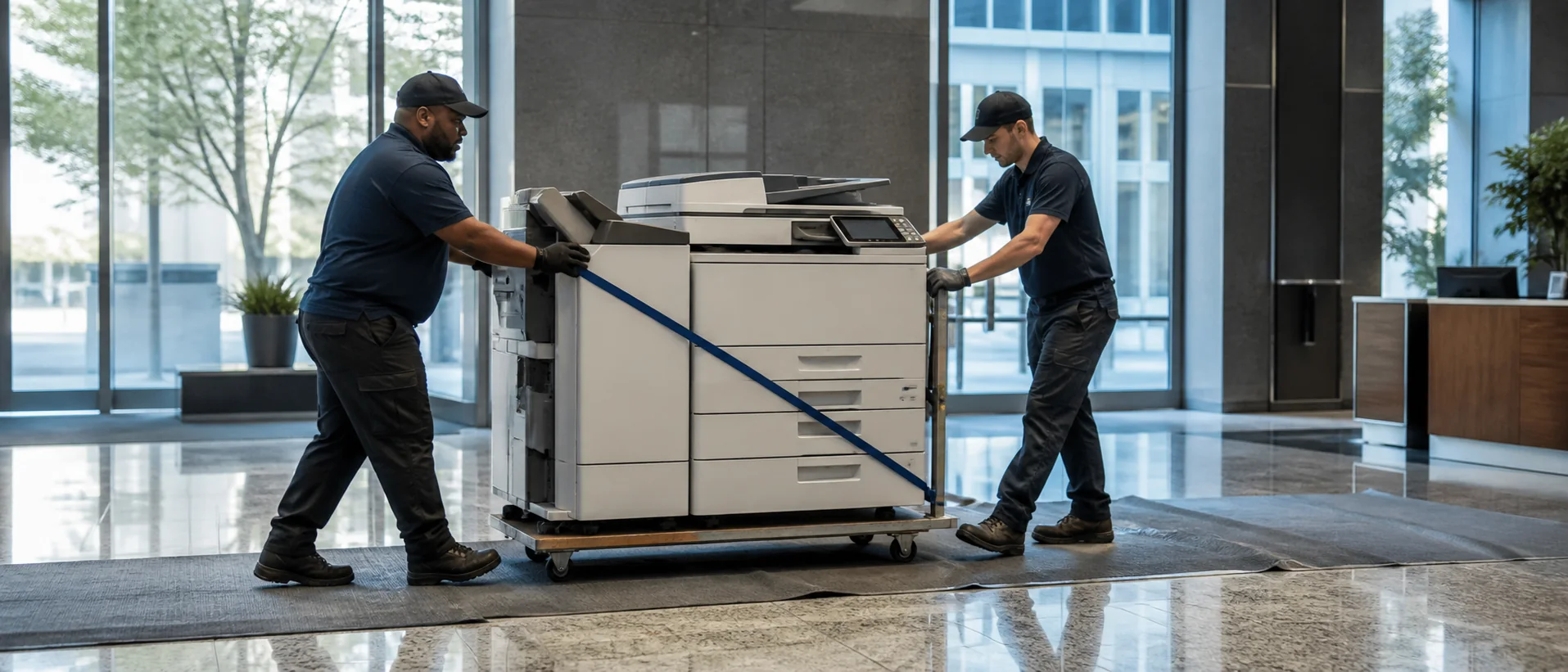
Delaware office copier dealer proposals should cover the exact work performed by corporate and financial offices, healthcare providers, manufacturers, logistics operations, state agencies, law firms, schools and small businesses. Delaware is compact, but a Wilmington headquarters, Dover public office and Sussex County operation can have different documents, access and recovery needs. A useful statewide comparison preserves those differences while requiring every provider to price the same equipment, workflow and service obligations.
Build a Delaware copier requirement from real office records
Start with device meters, service tickets and representative files from each location. Record black-and-white and color pages, long feeder batches, larger originals, finishing, secure documents and output moved to desktop printers or outside suppliers. Include contracts, patient forms, compliance packets, bills of lading, public records and confidential employee pages rather than relying on a total page count.
Use the office copier sizing guide to connect recurring jobs and peak timing to an appropriate class. Require the exact model, controller, feeder, drawers, finisher and software. Demonstrate an everyday legal, clinical, operating or public packet from paper through authentication, searchable text and approved retrieval.
Downtown buildings, medical campuses, industrial sites, warehouses and county offices have different delivery and technician-access conditions. Facilities, security, IT and a frequent user should verify placement, power, network ownership and acceptance. Put every address and service window on the requirement.
Compare Delaware copiers for sale, lease and service cost
Separate cash price, financed or lease total, maintenance base, included pages, overages, supplies, software, implementation and training. Add annual increases, taxes, building access, travel, data removal and return freight. The commercial copier price guide keeps omitted accessories and responsibilities from appearing as savings.
Model routine demand plus legal, tax, audit, public, clinical, production or shipping peaks. Ask whether pages can be pooled across Delaware offices and how a move or new branch changes the agreement. Compare copier leasing versus buying over the same useful life and configuration.
Require sample invoices and an asset schedule showing serials, accepted options, subscriptions, page minimums and notice dates. Review pages, color ratio, tickets and downtime quarterly. A statewide account should still reveal the performance and cost of each machine.
Protect Delaware information and define statewide continuity
IT should test secure release, identity, OCR and approved network or cloud destinations. Review encryption, administrator roles, firmware, logs and data sanitization. The copier security checklist supports legal, financial, patient, public and corporate records.
Ask providers to identify technicians, common-parts locations, response windows and escalation for northern, central and southern addresses. Define alternate output for patient, contract, payroll, shipping, quality or public documents. An arrival-time promise is incomplete without a plan for restoring identity, scanning and finishing.
References should match the proposed geography, access and operating hours. Ask when users could complete the full process after a fault and whether the correction lasted. Preserve accepted files, settings and a one-page continuity sheet with every asset.
Include local records owners and daily operators in the first service review. Their evidence can reveal search, permissions, paper and supply failures that hardware uptime alone cannot show. Carry the final corrections into future software changes and renewal decisions.
Price one Delaware requirement without hiding local needs.
Give providers the same equipment, workflow and support scope.