
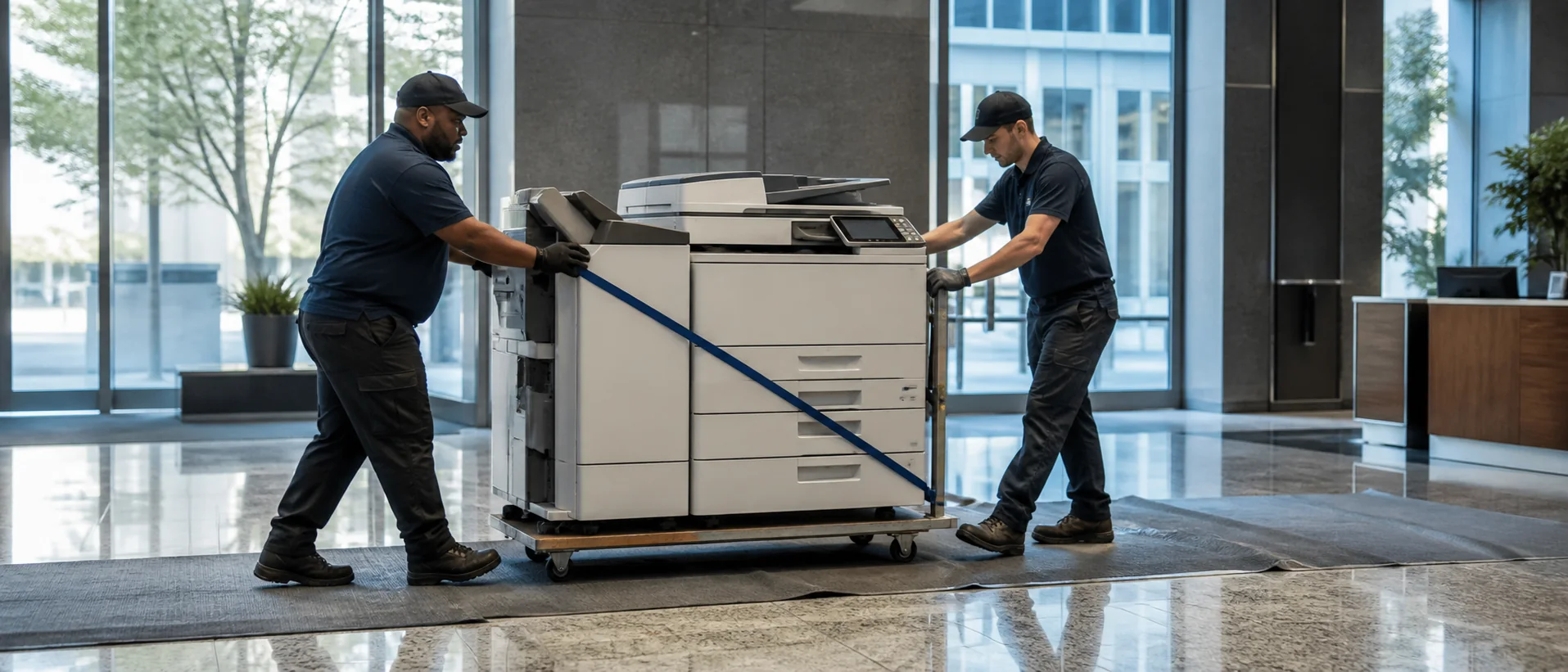
Cedar Rapids copiers for lease should be compared with purchase proposals around the records used by insurance and financial services, food processors, advanced manufacturers, aerospace and electronics firms, healthcare systems, logistics operations and public agencies. Claims, quality packets, shipping papers and patient documents create different requirements. A strong Linn County request tests those workflows and makes shift-ready service accountable.
Build Cedar Rapids copier needs for finance and production
Collect meters, tickets and real files from claims, engineering, quality, production, clinical, logistics, public and administrative users. Include policy records, technical documents, inspection packets, shipping papers, patient forms, mixed scans, color training material and confidential employee pages. Record work transferred during outages.
The copier speed guide connects deadline batches and shift changes to useful feeder, processor and paper capacity. Require exact model, controller, trays, finisher and workflow licenses. Test an ordinary claim, quality or patient packet through OCR and approved retrieval.
Corporate offices, plants, warehouses, hospitals and public buildings have distinct loading, safety and technician access. Facilities, IT and operating users should approve installation. Include second-shift or deadline-critical departments.
Compare Cedar Rapids copier prices across sites and shifts
Request cash price, lease total, service base, included pages, overages, supplies, software, implementation and training separately. Add annual increases, taxes, travel, access, sanitization and return freight. The commercial copier cost guide prevents a missing service duty from looking like savings.
Model routine demand plus claims, production, inspection, shipping, clinical and year-end peaks. Ask whether pages can be pooled and what hours and parts are included. Compare copier lease versus purchase over one useful life.
Require device-level invoices and an accepted asset schedule. Store serials, options, subscriptions, minimums and notice dates together. Quarterly review should connect cost to shift coverage, supply reliability and workflow restoration.
Secure Cedar Rapids records and operating continuity
IT should test identity, secure print, OCR and approved financial, technical or clinical repositories. Review encryption, administrator privileges, firmware, logs and data removal. The copier security guide supports claims, quality and patient information.
Ask which technicians and parts serve each Cedar Rapids site and who owns repeat-fault escalation. Define alternate output for claims, quality, shipping, patient, payroll or public documents. Severe-weather plans should identify local contacts and backup equipment.
References should have comparable shifts and document risk. Ask when users could complete the entire process and whether the repair lasted. Preserve accepted files, expected results and a facility-level continuity sheet.
Include quality, records and floor supervisors in the first review so paper, permissions, scan and training issues are separated from hardware faults. Retain final corrections for later changes.
Record priority claims and technical files, facility contacts, approved alternate output and final recovery settings with every major asset. Reuse them after driver, identity or staffing changes locally.
Compare Cedar Rapids copier prices with shift-ready support defined.
Compare one complete equipment, workflow and service requirement.