
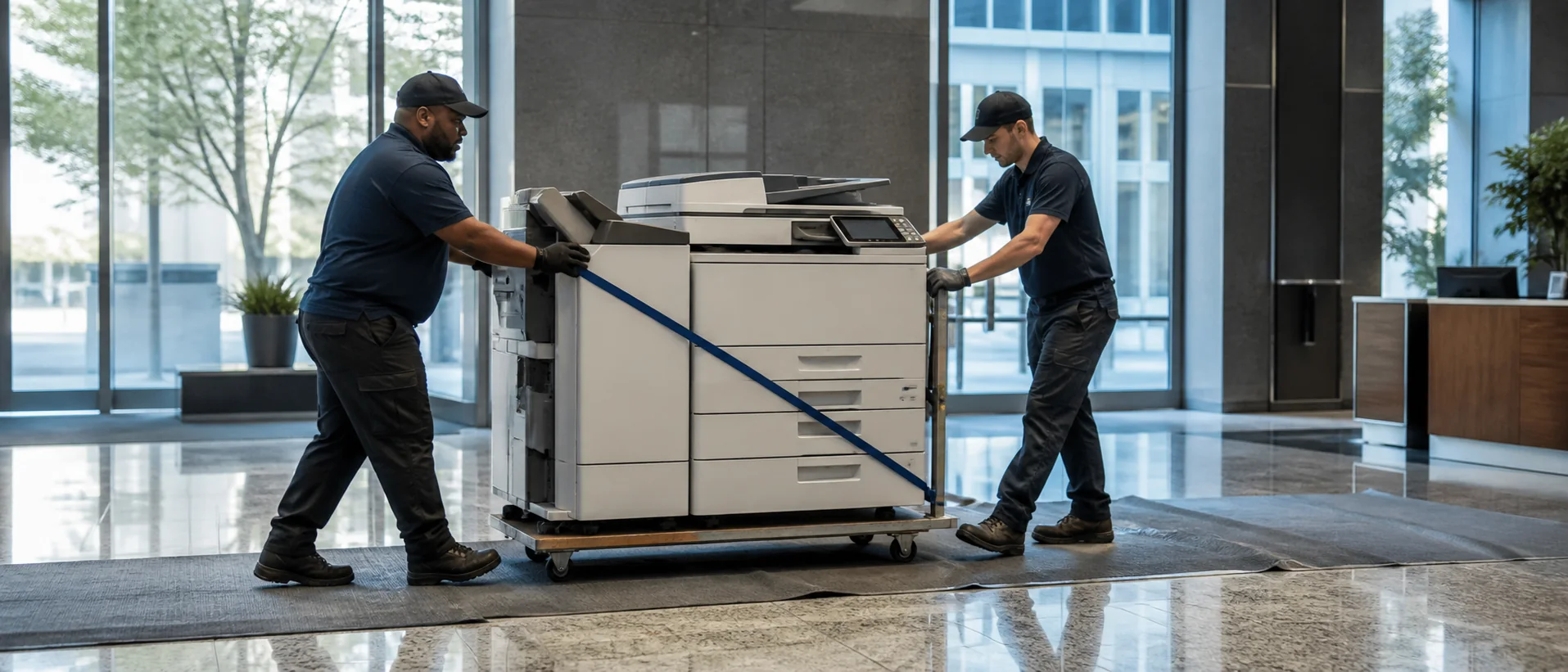
New Orleans copiers for sale should be compared with lease proposals around the records of hospitality and tourism businesses, port and maritime operations, healthcare systems, universities, law firms, government, nonprofits and professional offices. Guest documents, shipping records, patient forms and legal packets create different security and availability needs. A useful Orleans Parish request tests those workflows and plans for building access, event peaks and storm continuity.
Specify New Orleans copiers for hospitality, maritime and professional work
Gather meters, tickets and real files from hotels, event teams, maritime and logistics users, clinical departments, universities, legal offices, public agencies and nonprofits. Include guest packets, manifests, bills of lading, patient forms, case files, applications, mixed scans, color event material and confidential employee pages. Record outsourced output and temporary-event printing.
The copier speed guide connects simultaneous deadlines and feeder batches to useful throughput. Require exact model, controller, trays, finisher and workflow software. Test an ordinary guest, shipping, patient or legal packet through secure release, OCR and retrieval.
Historic buildings, hotels, hospitals, campuses, port properties and downtown towers impose distinct loading, elevator, security and environmental conditions. Facilities, security, IT and daily users should approve installation. Include event, clinical, port and weekend hours.
Compare New Orleans copier leases across events and operating peaks
Request equipment price, lease total, service base, included pages, overages, supplies, software, implementation and training as separate lines. Add annual increases, taxes, parking, restricted access, relocation, sanitization and return freight. The commercial copier pricing guide makes these building and operating costs visible.
Model regular demand plus conventions, festivals, cruise and shipping peaks, clinical cycles, academic terms and court deadlines. Ask whether pages can be pooled across metro properties and what hours receive coverage. Compare leasing versus buying commercial copiers over the same useful life.
Require invoices by device and property. Keep serials, accepted options, subscriptions, minimums and notice dates together. Review utilization after the first major event or seasonal peak.
Protect New Orleans records and prepare for disruption
IT should test identity, secure print, OCR and approved guest, maritime, clinical, legal or public repositories. Review encryption, administrator privileges, firmware, logs and data removal. The copier security checklist supports confidential and regulated information.
Ask which technicians and parts serve each property, how secured or occupied buildings grant access and who owns a fault involving identity or the repository. Define alternate output for guest service, cargo, patient care, payroll, court or public deadlines.
Hurricane continuity should name shutdown responsibility, protected supplies, remote contacts, alternate equipment and restoration checks. A provider’s plan should cover workflow settings and data, not only physical hardware.
References should share comparable access, hours and seasonal demand. Ask when users could complete the full process and whether a recurring issue was eliminated. Preserve accepted files, destination maps and a property-level continuity sheet.
Compare New Orleans copier prices with event and storm readiness defined.
Compare one complete equipment, workflow and service requirement.