
Ann Arbor copiers for lease should be compared with purchase proposals for university departments, healthcare providers, research laboratories, biotechnology and technology firms, startups, schools, nonprofits and professional offices. Patient forms, grant records, laboratory files and client documents require different security and deadline handling. A useful Washtenaw County comparison tests those workflows and prices the exact equipment, integration and recovery responsibility.
Specify Ann Arbor copiers for research, healthcare and academic work
Gather meters, ticket history and representative files from clinical, academic, laboratory, research, technical, nonprofit and administrative teams. Include patient packets, grant submissions, study records, course materials, contracts, mixed scans, color presentations and confidential employee pages. Record desktop output and work sent outside during deadlines.
The office copier sizing guide connects simultaneous use, feeder batches and credible growth to appropriate capacity. Require exact model, controller, drawers, finisher and workflow software. Test a normal patient, research or grant packet through authentication, OCR and approved retrieval.
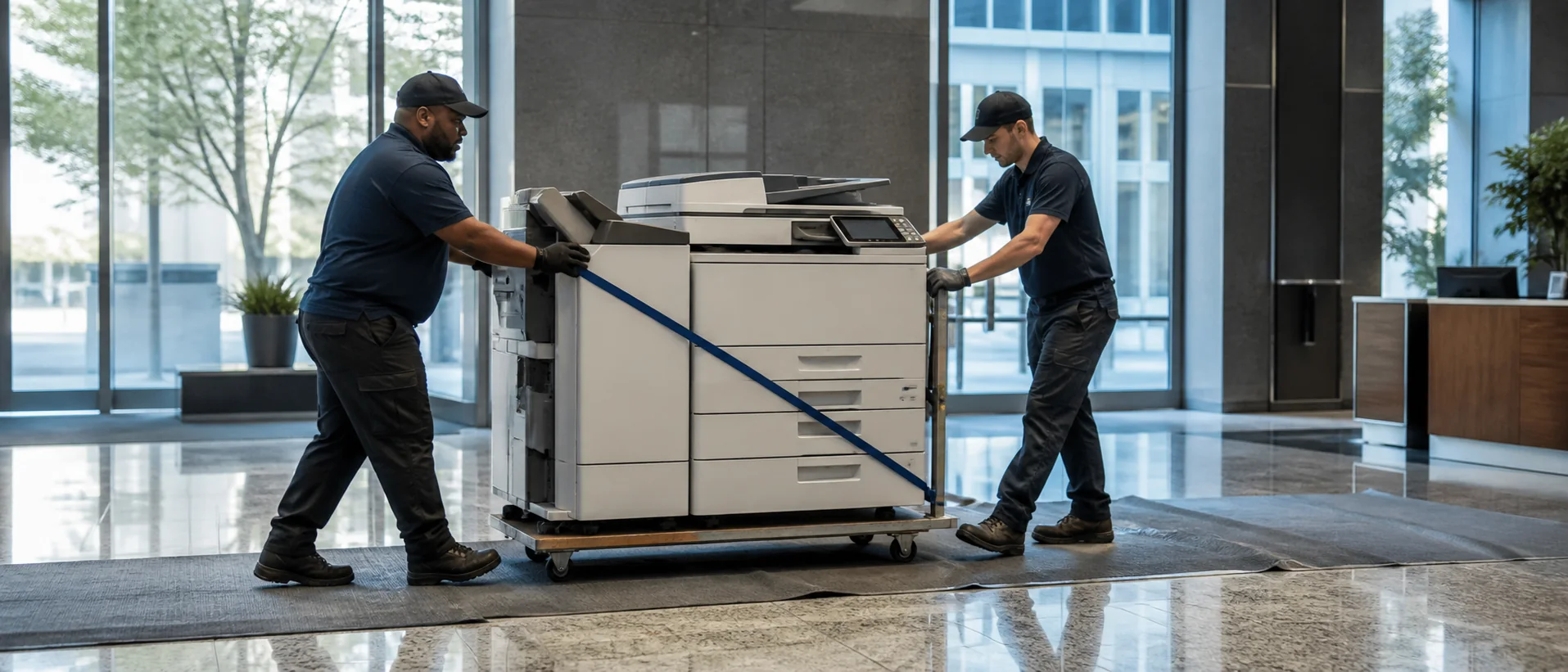
Medical and university campuses, laboratories, incubators and downtown offices have different loading, elevator, security and technician-access rules. Facilities, lab safety, IT and frequent users should approve placement and acceptance. Include clinical and research hours.
Compare Ann Arbor copier pricing through grant and clinical cycles
Request equipment price, lease total, maintenance base, included pages, overages, supplies, software, implementation and training separately. Add annual escalators, taxes, parking, security access, moves, sanitization and return freight. The office copier cost guide keeps these institutional obligations visible.
Model routine demand plus grant deadlines, clinical cycles, enrollment, research reviews and fiscal-year peaks. Ask whether pages can be pooled across campus or clinic locations and how a lab move affects coverage. Compare copier leasing versus purchase over one useful life.
Require invoices by device and an accepted asset schedule. Store serials, options, subscriptions, minimums and notice dates together. Review utilization after the first major academic, clinical or grant cycle.
Protect Ann Arbor information and restore complete workflows
IT should test identity, secure print, OCR and approved clinical, research or academic repositories. Review encryption, administrator privileges, firmware, logs, retention and sanitization. The copier security guide supports protected health, research, student and client information.
Ask which technicians and parts serve each property and who owns a failure involving the device, identity system or repository. Define alternate output for patient care, research, coursework, payroll or submission deadlines.
References should have similar access, integrations and operating hours. Ask when users could complete their entire task and whether the correction lasted. Preserve accepted files, destination maps and expected results.
Ann Arbor organizations adding a laboratory, clinic or project office should price that likely change before signing. Document site surveys, secure setup, destination migration, acceptance and page pooling so expansion does not create an unplanned implementation project.
Procurement teams should also separate equipment acceptance from scientific or clinical application approval. A copier can print correctly while an OCR profile, metadata rule or secure destination still fails; both results belong in the written acceptance record before recurring billing begins.
Compare Ann Arbor copier prices on the work users must finish.
Compare one complete equipment, workflow and service requirement.