
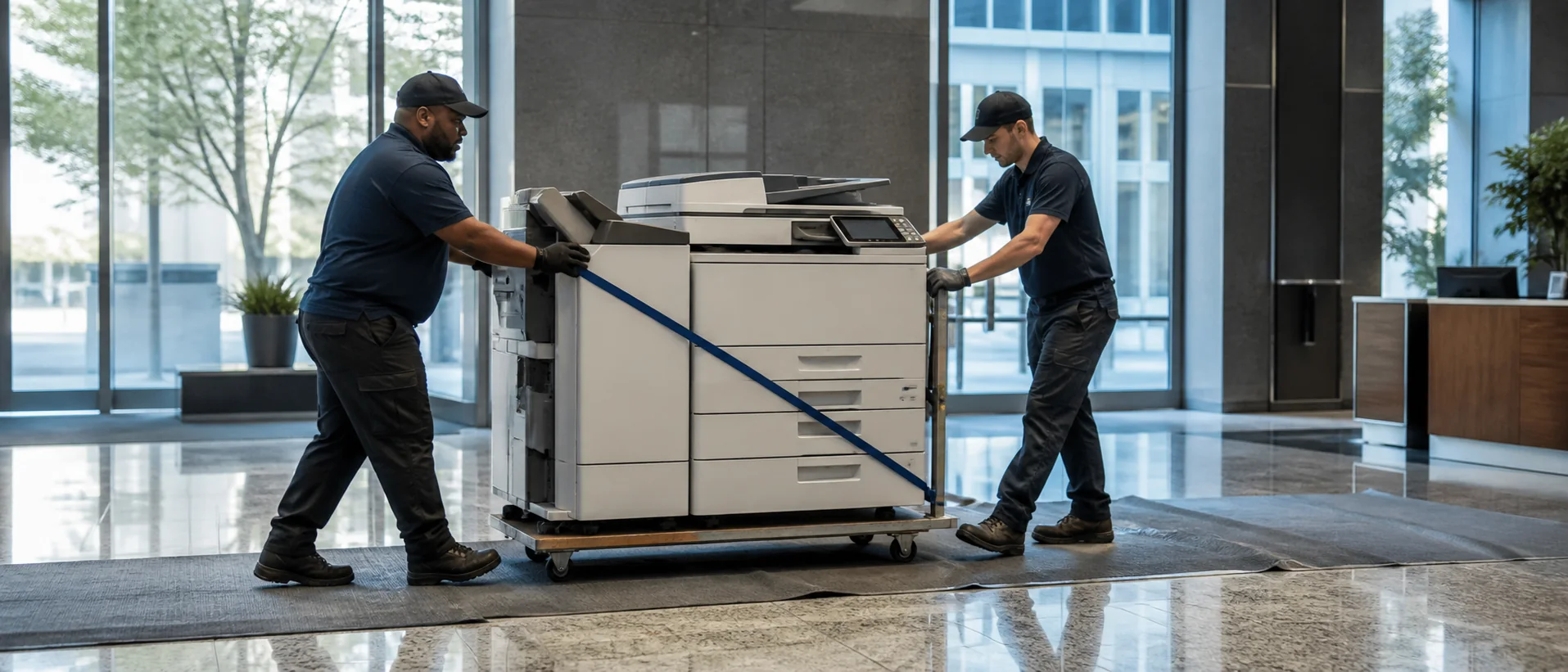
Grand Rapids copiers for lease should be compared with purchase proposals for healthcare systems, furniture and advanced manufacturers, food and agriculture businesses, logistics operations, colleges, financial firms and professional offices. Patient forms, engineering packets, quality records and shipping documents create different paper and availability needs. A strong west Michigan comparison tests those workflows and prices shift coverage, implementation and complete recovery.
Build Grand Rapids copier needs for healthcare and manufacturing
Collect meters, ticket history and actual files from clinical, engineering, furniture, production, food, quality, logistics, academic, financial and administrative users. Include patient packets, drawings, specifications, inspection records, labels, bills of lading, mixed scans, color sales material and confidential pages. Record outside work and output moved during outages.
Use the A3 and A4 copier guide to decide whether design and technical originals justify floor-standing capacity. Require exact feeder, controller, drawers, finisher and workflow licenses. Test an ordinary patient, design or quality packet through OCR and approved retrieval.
Hospitals, plants, design offices, warehouses, campuses and downtown properties impose different docks, dust, power and security. Facilities, safety, IT and floor users should approve installation. Include clinical, production and receiving shifts.
Compare Grand Rapids copier pricing across production and growth
Separate equipment price, lease total, maintenance base, included pages, overages, supplies, software, setup and training. Add annual increases, taxes, travel, relocation, data removal and return freight. The office copier pricing guide keeps each operating obligation visible.
Model routine demand plus healthcare, production, design-launch, shipping, enrollment and year-end peaks. Ask whether pages can be pooled across west Michigan facilities and how a new plant, clinic or office changes the agreement. Compare copier leasing versus buying over the same useful life.
Require device-level invoices and an accepted asset schedule. Store serials, options, subscriptions, minimums and notice dates together. Review cost and service after the first production or clinical peak.
Secure Grand Rapids records and maintain operating continuity
IT should test authentication, secure release, OCR and approved clinical, design, quality or financial repositories. Review encryption, administrator roles, firmware, logs and sanitization. The answer on what belongs in a copier service agreement helps divide responsibility.
Ask which technicians and parts serve each building, what hours apply and who escalates a repeated fault. Define alternate output for patient care, design, production, shipping, payroll or customer deadlines.
References should have comparable facilities, shifts and integrations. Ask when users could complete the whole workflow and whether the repair held. Preserve accepted files, expected results and a facility-level continuity record.
Grand Rapids organizations expanding through Kent County should price the new-site process before signing. Document surveys, delivery, secure configuration, destination migration, acceptance, supplies and page pooling for each future address.
Manufacturing and design teams should include unusual media, large technical originals and finishing samples in the demonstration. Document image scale, color expectations, scan naming and operator steps so the accepted workflow can be reproduced after training, firmware changes or device replacement.
Compare Grand Rapids copier prices with production and growth included.
Compare one complete equipment, workflow and service requirement.