
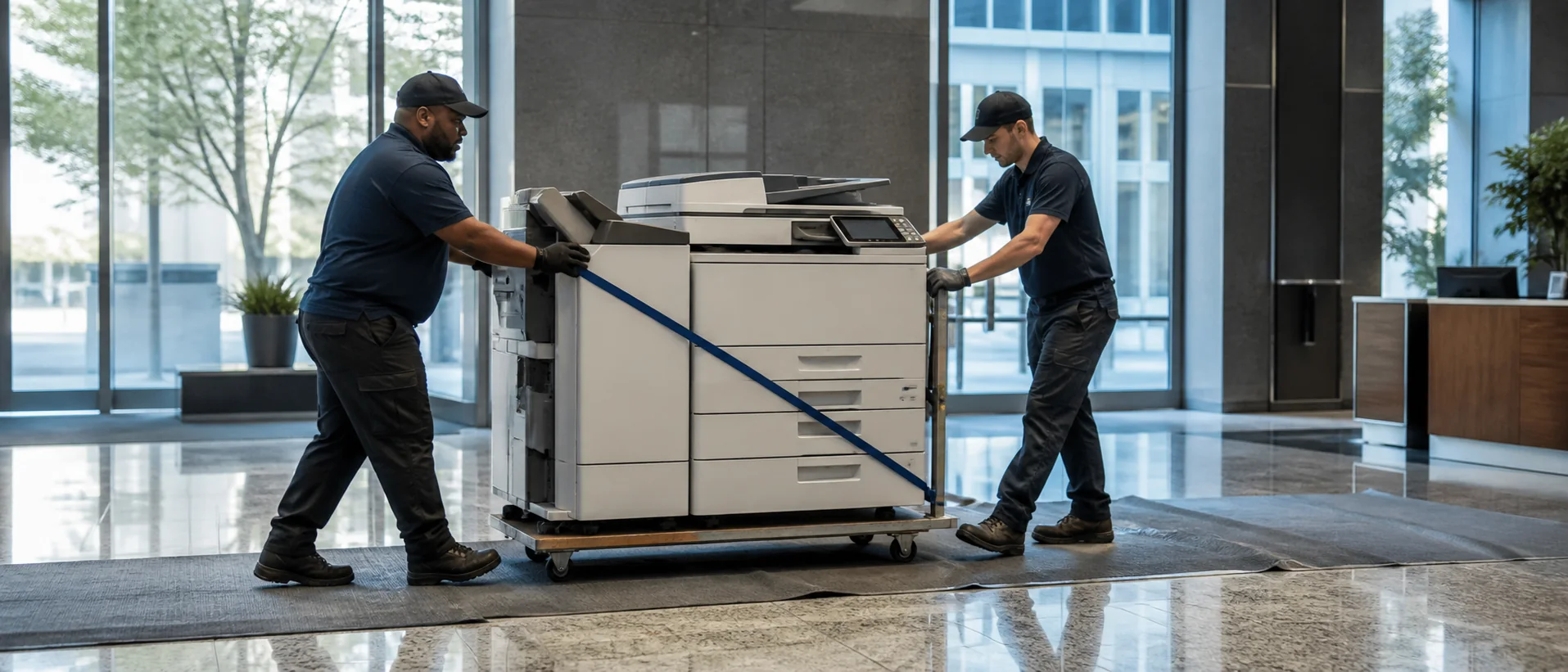
Troy copiers for sale should be compared with lease options for corporate headquarters, automotive suppliers, engineering firms, financial and insurance offices, healthcare providers, technology companies, law firms and professional services. Contracts, engineering packets, claims and patient forms create different security and deadline requirements. A strong Oakland County comparison measures each department and prices the exact equipment, integrations and full-term support.
Build Troy copier needs for corporate and technical offices
Collect meters, service history and actual files from corporate, engineering, automotive, financial, insurance, clinical, technical, legal and administrative users. Include contracts, technical packets, claims, patient forms, client proposals, mixed scans, color presentations and confidential employee pages. Record hybrid occupancy, desktop output and outside production.
Use the copier speed guide to connect simultaneous deadlines and feeder batches to useful throughput. Require exact model, controller, trays, finisher and workflow software. Test a normal claim, technical or client packet through secure release, OCR and retrieval.
Corporate campuses, medical buildings and multitenant offices have different loading, elevator, parking and security. Facilities, security, IT and frequent users should approve installation by address and floor.
Compare Troy copier leases through office and staffing change
Separate equipment price, lease total, maintenance base, included pages, overages, supplies, software, implementation and training. Add annual increases, taxes, access, relocation, data removal and return freight. The office copier pricing guide creates an auditable comparison.
Model ordinary hybrid demand plus claims, engineering, clinical, proposal, audit and year-end peaks. Ask whether pages can be pooled across southeast Michigan offices and how expansion, consolidation or a move affects service. Compare copier leasing versus buying over the same useful life.
Require invoices by device and address. Keep serials, accepted options, subscriptions, minimums and notice dates together. Quarterly review should connect cost to occupancy, scan success, color and downtime.
Secure Troy records and assign system recovery
IT should test identity, secure print, OCR and approved cloud or network repositories. Review encryption, administrator roles, firmware, logs and sanitization. The answer on what a copier service agreement should include helps divide ownership.
Ask which technicians serve each building, how they gain access and who owns a fault involving the copier, identity provider or repository. Define alternate output for claims, patient, engineering, payroll, legal or client documents.
References should share similar offices, integrations and deadlines. Ask when users could complete the full task and whether the correction held. Preserve accepted files, destination maps and a building-level continuity sheet.
Troy buyers with hybrid teams should compare demand against occupied-day patterns, not only annual totals. Ask how secure release, remote administration and supplies work when attendance shifts among headquarters, satellite offices and home-based employees.
Corporate procurement should require a device and subscription schedule that remains usable after staff changes. List every controller, finisher, security feature, cloud connector, license, renewal and support owner so an apparently simple fleet agreement does not hide separate software commitments.
Compare Troy copier prices with every corporate requirement visible.
Compare one complete equipment, workflow and service requirement.