
Quotes from Columbia office copier dealers should fit university and school departments, healthcare providers, insurance firms, government offices, technology companies, construction businesses, nonprofits and professional services. Research records, course packets, patient forms and claims create different security and deadline demands. A useful Boone County comparison tests those files and prices exact equipment, campus access and complete workflow recovery.
Commercial Copier Dealers in Columbia
Office copier dealers in Columbia can help you choose commercial copiers for your office size, printing needs and budget. Gather meters, service history and representative files from academic, research, clinical, insurance, technical, public, construction and administrative users. Include grant packets, study records, course materials, patient forms, claims, plans, mixed scans, color presentations and confidential employee pages. Record desktop output and work moved during deadlines.
The copier sizing guide connects simultaneous use, feeder batches and growth to appropriate capacity. Require exact model, controller, drawers, finisher and software. Test a normal research, course, patient or claim packet through authentication, OCR and approved retrieval.
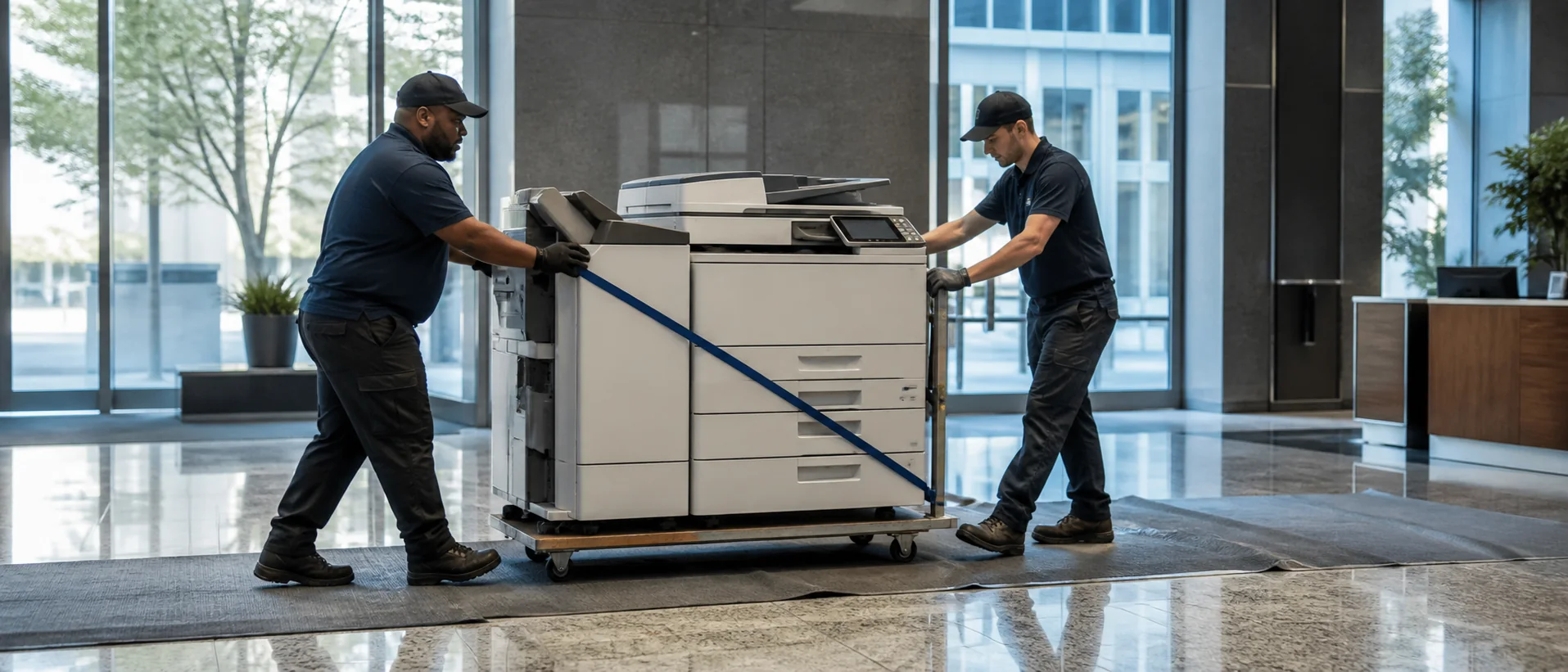
Campuses, laboratories, hospitals, public buildings and construction offices have different loading, parking, security and technician access. Facilities, lab safety, IT and daily users should approve installation. Include academic, clinical and research hours.
Compare Columbia Copier Dealer Prices and Lease Options
Compare Columbia office copier dealers on both the purchase or lease price and the cost of ongoing service. Request equipment price, lease total, maintenance base, included pages, overages, supplies, software, implementation and training separately. Add annual increases, taxes, parking, relocation, data removal and return freight. The office copier cost guide keeps campus access and workflow licenses visible.
Model routine demand plus enrollment, exams, grants, clinical work, claims and fiscal-year peaks. Ask whether pages can be pooled across Boone County properties and how a department or clinic move changes service. Compare copier leasing versus purchase over the same useful life.
Require invoices by device and department. Store serials, accepted options, subscriptions, minimums and notice dates together. Review utilization after the first semester, clinical or grant cycle.
Local Copier Dealer Service in Columbia
Choose commercial copier dealers in Columbia with installation and support options that fit your business. IT should test identity, secure print, OCR and approved research, academic, clinical or insurance repositories. Review encryption, administrator roles, firmware, logs and sanitization. The office copier security checklist supports research, student, patient, claim and personnel information.
Ask which technicians and parts serve each property and who owns a failure involving the device, identity or repository. Define alternate output for coursework, research, patient care, claims, payroll or public deadlines.
References should share similar access and integrations. Ask when users could complete the full task and whether the correction lasted. Preserve accepted files and expected results.
Columbia organizations using grant or restricted funds should require billing detail by device, department and project. Ask how page pools, color controls, subscriptions and service credits remain auditable inside a broader agreement.
Acceptance should distinguish basic copier output from research or clinical application approval. A test page can succeed while OCR, metadata, retention or destination permissions fail; require both results and preserve the working profiles before recurring billing begins.
Get Quotes from Copier Dealers in Columbia
Compare commercial copiers, purchase prices and lease options for your Columbia business.