
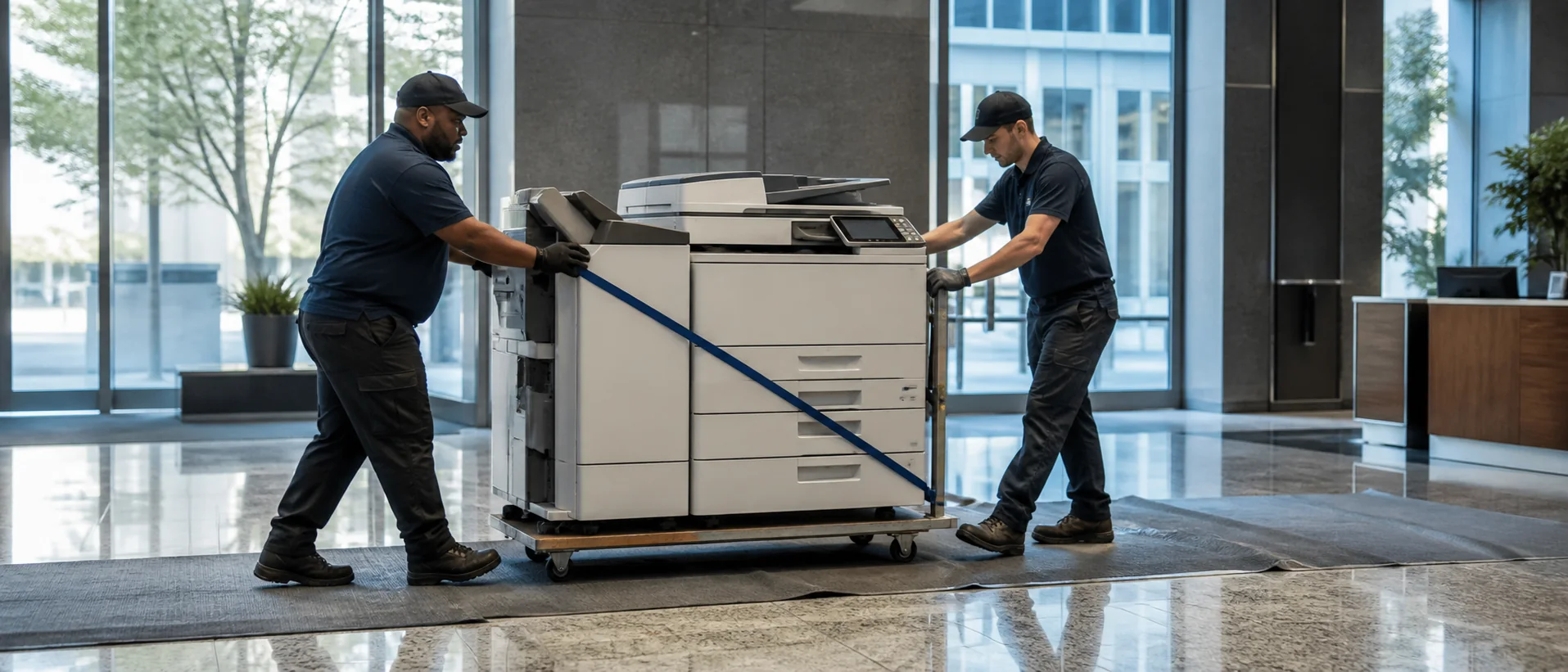
Montana copiers for lease should be compared with purchase proposals using the actual files, distances and support conditions at every address. Healthcare, agriculture and ranching, energy and mining, tourism, universities, government, construction, logistics and professional services operate across a large and lightly populated state. A statewide copier plan should standardize security, reporting and contract terms while keeping each clinic, field office, campus, hotel and production site’s equipment and recovery needs visible.
Build a Montana copier standard from local operating evidence
Collect meters, ticket history and representative files by site. Include patient forms, agricultural records, engineering and inspection packets, guest documents, applications, shipping papers, public files, mixed scans, color safety materials and confidential employee pages. Record desktop and outside printing because central reports can miss work moved during outages or seasonal demand.
Use the office copier buyer’s guide to define approved equipment ranges and acceptance tests. Require exact model, controller, feeder, drawers, finisher and workflow licenses at each address. Test an ordinary clinical, technical, public or guest packet through authentication, OCR and approved retrieval.
Hospitals, rural clinics, campuses, energy sites, hotels and public buildings have different loading, power, dust, weather and technician-access conditions. Facilities, safety, IT and frequent users should approve installation. Put seasonal hours, winter access, restricted areas and local contacts on the equipment schedule.
Compare Montana copier sales and leases on complete cost
Separate equipment price, finance or lease total, service base, included pages, overages, supplies, software, implementation and training. Add annual increases, taxes, mileage, relocation, data removal and return freight. The commercial copier pricing guide prevents a missing accessory or long service route from appearing as savings.
Model routine work plus tourism, harvest, clinical, energy-project, academic and fiscal-year peaks. Ask whether pages can be pooled, which counties incur travel and how a seasonal or new location changes coverage. Compare copier leasing versus buying over one useful life.
Require sample invoices and asset-level reporting. Store serials, accepted configurations, subscriptions, minimums and notice dates together. Quarterly review should connect cost to supplies, downtime and completed workflows by site.
Protect Montana records and verify statewide recovery
IT should test secure release, identity, OCR and approved repositories with actual files. Review encryption, administrator roles, firmware, logs and sanitization. The copier security checklist supports patient, technical, financial, public and personnel information.
Ask providers to map dispatch origin, technicians, common parts, hours and escalation for every address. Define alternate output for patient care, field operations, guest service, payroll or public deadlines. Winter weather and long routes make protected supplies, remote support and practical replacement equipment part of the comparison.
References should match the proposed geography and schedule. Ask when users could complete their whole workflow and whether the correction lasted. Preserve accepted files and expected results with each asset.
Include local records owners and frequent users in the first review so permissions, scanning, media, training and invoices receive the same measured attention as hardware uptime.
Price one Montana requirement with local distances clear.
Compare equipment, workflow, cost and recovery on equal terms.