
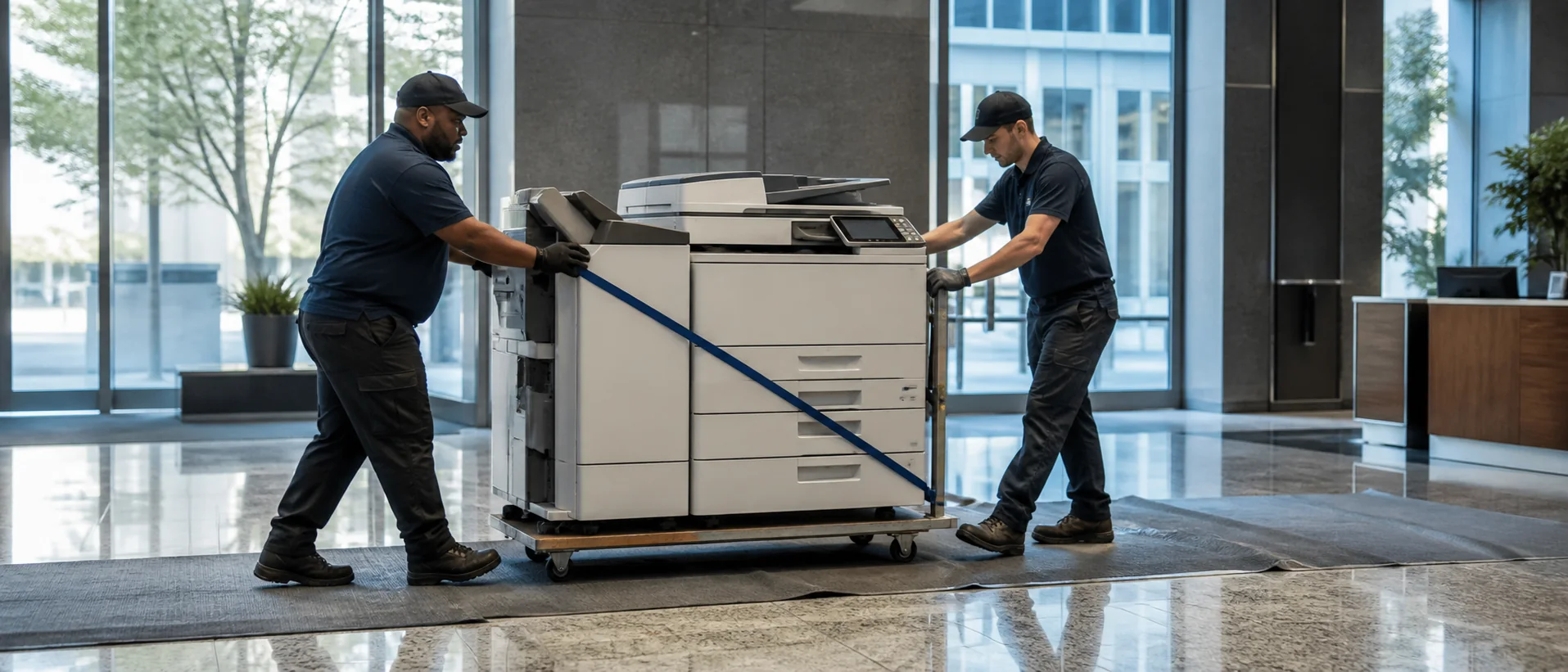
Elizabeth copiers for lease should be compared with purchase proposals for port and logistics businesses, manufacturers, healthcare providers, transportation firms, retailers, government offices, schools and professional services. Shipping records, customs and receiving documents, patient forms and quality packets create different deadline and security needs. A useful Union County comparison tests those workflows and prices exact equipment, facility access and recovery.
Specify Elizabeth copiers for port, logistics and healthcare work
Gather meters, tickets and representative files from port, warehouse, logistics, manufacturing, quality, clinical, transportation, retail, public and administrative users. Include bills of lading, receiving papers, inspection records, patient packets, permits, mixed scans, color safety material and confidential employee pages. Record manual work and output moved during downtime.
The A3 versus A4 copier comparison helps decide whether technical originals and larger operating documents justify full-size capacity. Require exact feeder, controller, drawers, finisher and workflow licenses. Test an ordinary shipping, quality or patient packet through OCR and approved retrieval.
Port properties, warehouses, plants, hospitals and public buildings have different docks, credentials, safety and technician access. Facilities, security, IT and floor users should approve installation. Include receiving, production and clinical hours.
Compare Elizabeth copier cost across facilities and shifts
Request cash price, lease total, service base, included pages, overages, supplies, software, setup and training separately. Add annual increases, taxes, security access, parking, relocation, data removal and return freight. The office copier cost guide keeps operational obligations visible.
Model normal demand plus shipping, inventory, production, clinical and fiscal-year peaks. Ask whether pages can be pooled across Union County sites and what hours receive coverage. Compare copier leasing versus purchase over one useful life.
Require invoices by device and facility. Store serials, options, subscriptions, minimums and notice dates together. Review cost and restoration after the first shipping or production peak.
Protect Elizabeth records and maintain facility continuity
IT should test identity, secure print, OCR and approved logistics, quality, clinical or public repositories. Review encryption, administrator roles, firmware, logs and sanitization. The copier security guide supports technical and confidential information.
Ask which technicians and parts serve each property, how secured facilities grant access and who owns a failure involving the device, identity or repository. Define alternate output for shipping, production, patient care, payroll or public deadlines.
References should have comparable shifts and access. Ask when users could complete the full workflow and whether the repair held. Preserve accepted files and expected results.
Elizabeth supervisors should record the longest recurring scan batch and most time-sensitive shipping document. Those jobs create a practical acceptance test for feeder reliability, naming, permissions and recovery when receiving cannot wait.
For facilities handling customs, receiving or controlled goods, the acceptance record should distinguish basic output from repository approval. Verify OCR, naming, authorization and retrieval on the actual records users handle, then preserve successful settings for later updates.
Price one complete Elizabeth copier requirement.
Compare equipment, workflow, cost and recovery on equal terms.