
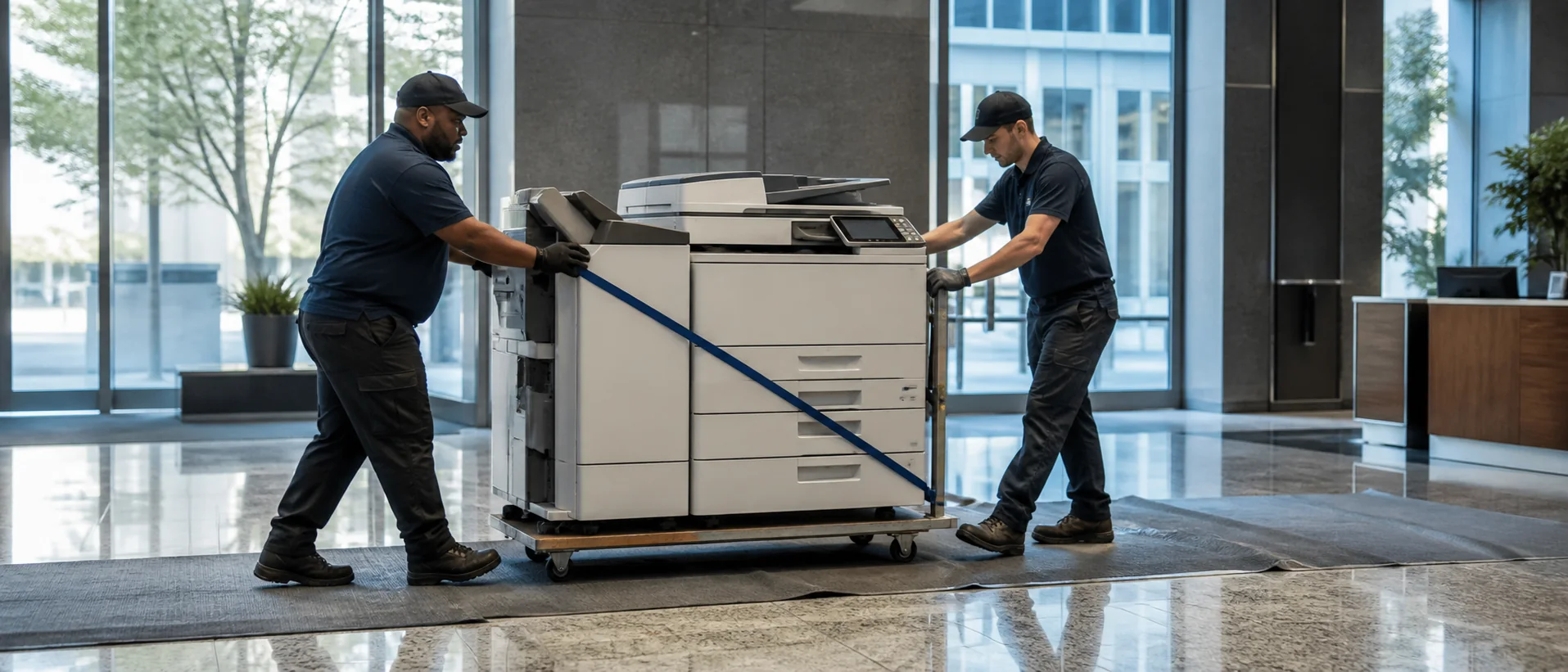
Charlotte copiers for sale should be compared with lease options for banking and financial firms, healthcare systems, energy companies, logistics operations, manufacturers, construction businesses, hotels and professional offices. Financial records, claims, patient forms and shipping documents create different privacy and availability needs. A strong Mecklenburg County comparison tests those workflows and makes high-rise access, integration and full recovery part of the price.
Build Charlotte copier needs for finance, healthcare and logistics
Collect meters, ticket history and actual files from banking, financial, insurance, clinical, energy, logistics, manufacturing, construction, hospitality and administrative users. Include statements, claims, patient packets, contracts, shipping papers, project files, mixed scans, color presentations and confidential pages. Record hybrid occupancy and outsourced output.
Use the copier speed guide to connect concurrent deadlines and scan batches to useful throughput. Require exact model, controller, drawers, finisher and software. Test a normal claim, patient, financial or shipping packet through authentication, OCR and retrieval.
High-rise offices, hospitals, energy sites, warehouses, plants and hotels have different docks, elevators, parking and security. Facilities, IT, security and shift users should approve installation.
Compare Charlotte copier cost across offices and operating peaks
Separate equipment price, lease total, service base, included pages, overages, supplies, software, implementation and training. Add annual escalators, taxes, parking, access, moves, data removal and return freight. The commercial copier pricing guide makes those obligations visible.
Model routine demand plus audit, claims, clinical, shipping, construction and year-end peaks. Ask whether allowances can be pooled across Charlotte-area sites and how a move changes coverage. Compare copier leasing versus buying over one useful life.
Require invoices by device and address. Store serials, options, subscriptions, minimums and notice dates together. Review cost against occupancy, secure usage and downtime.
Secure Charlotte records and verify complete restoration
IT should test identity, secure release, OCR and approved financial, clinical, energy or logistics repositories. Review encryption, administrator roles, firmware, logs and sanitization. The answer on copier service contract coverage helps assign ownership.
Ask which technicians and parts serve each building and who owns a failure involving the copier, identity or repository. Define alternate output for transactions, claims, patient care, shipping, payroll or client deadlines.
References should share similar buildings and integrations. Ask when users could complete the whole process and whether the fix held. Preserve accepted files and a building-level continuity record.
Before installation, document freight elevators, loading limits, certificates and approved service entry. Pricing those details early gives every dealer the same definition of completed delivery.
Financial and regulated teams should define retention for stored jobs, address books, audit logs and device data before approval. Procurement can then compare end-of-term sanitization, evidence and responsibility alongside price. Preserve successful authentication, scan and accounting profiles so later network changes can be tested against an accepted result.
Use the same accepted workflow when a Charlotte branch, department or acquired office joins the fleet.
Price one complete Charlotte copier requirement.
Compare equipment, workflow, cost and recovery on equal terms.