
Providence copiers for lease should be compared with purchase proposals for healthcare and life-science organizations, universities and research groups, financial and insurance firms, government agencies, design and creative businesses, hospitality groups, nonprofits and professional offices. Patient records, grant files, policy documents and branded material require different security and color controls. A useful city comparison tests them before pricing equipment.
Specify Providence copiers for clinical, academic and financial work
Gather meters, tickets and actual files from hospitals, life-science teams, universities, laboratories, banks, insurers, agencies, design groups, hotels, nonprofits and professional users. Include patient packets, research records, grant files, policies, public forms, guest material, mixed scans, color presentations and confidential pages. Record hybrid and outsourced output.
The copier speed guide connects concurrent clinical, scan and office deadlines to useful throughput. Require exact model, controller, feeder, drawers, finisher, color controls and software. Test a normal patient, research or financial packet through authentication, OCR and retrieval.
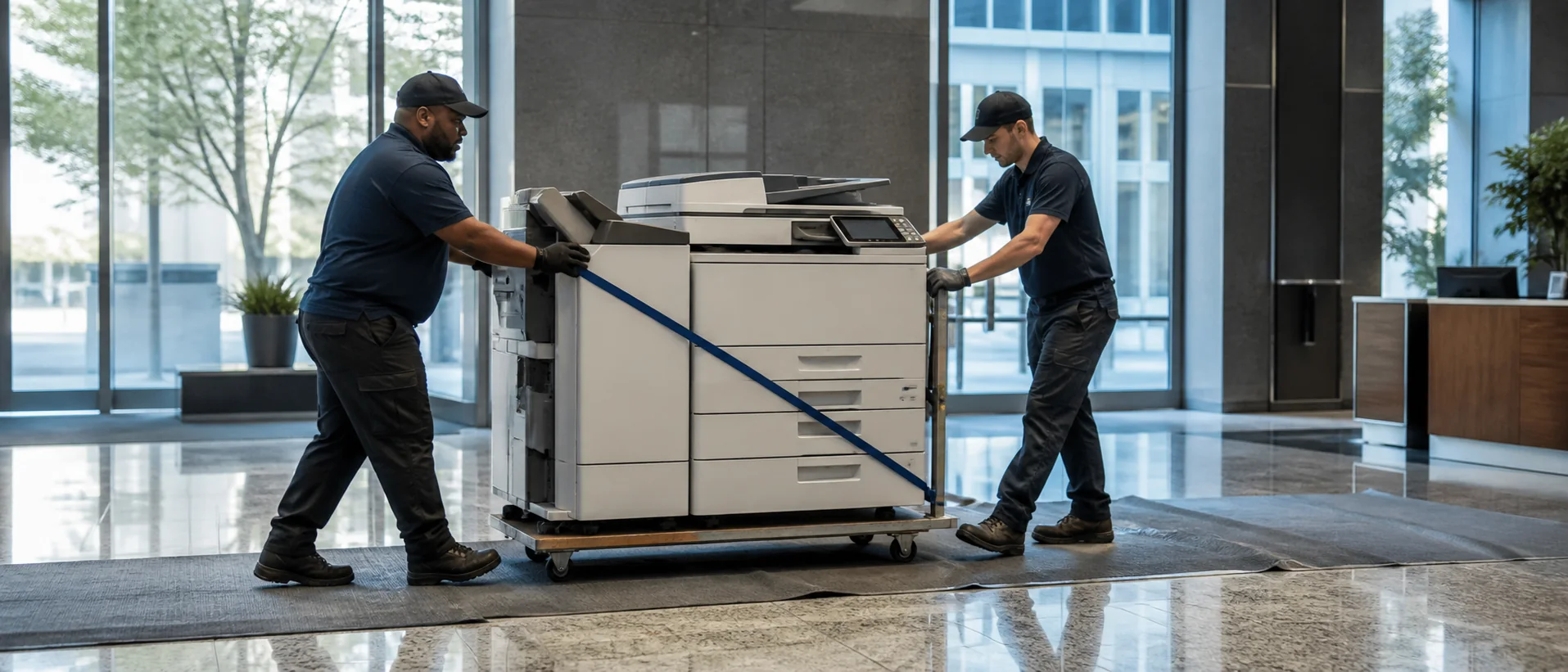
Medical campuses, laboratories, university buildings, towers, hotels and public offices have different docks, elevators, parking and credentials. Facilities, security, IT and daily users should approve installation.
Compare Providence copier pricing across buildings and departments
Request cash price, lease total, service base, included pages, overages, supplies, applications, implementation and training separately. Add annual increases, taxes, parking, restricted access, relocation, sanitization and return freight. The office copier cost guide keeps clinical and campus workflow obligations visible.
Model routine demand plus clinical, research, enrollment, audit, event, tourism and fiscal peaks. Ask whether pages can be pooled and how an added office changes service. Compare leasing versus purchasing copiers over the same useful period.
Require sample invoices by device, building and cost center. Keep accepted options, subscriptions, minimums, service credits and notice dates together.
Secure Providence records and prove complete recovery
IT should test secure release, identity, OCR and approved clinical, research, financial or public repositories. Review encryption, administrator roles, firmware, logs, retention and sanitization. The copier service agreement guide helps assign labor, parts and application responsibility.
Ask which technicians can enter each property and who owns a fault spanning device, identity and destination. Define backup output for patient care, research, transactions, guests, payroll and public deadlines.
References should match institutional access and integrations. Preserve accepted files, metadata, color settings and expected results. Providence research and nonprofit groups using restricted funds should require billing by device, department and project so shared pages, subscriptions and service credits remain auditable.
Design and hospitality teams should approve representative color files on actual stock and retain the controller and finishing settings. Retest the standard after driver, firmware or paper changes.
Price moves and added offices before award so growth follows the accepted security and workflow process.
High-rise and campus buyers should document loading windows, elevator reservations, certificates, security approval and the person who validates every destination. Pricing those details before award gives Providence dealers the same completion standard and avoids discovering during installation that a restricted entrance or missing repository owner will delay acceptance.
Price one complete Providence copier requirement.
Compare equipment, workflow, cost and recovery on equal terms.