
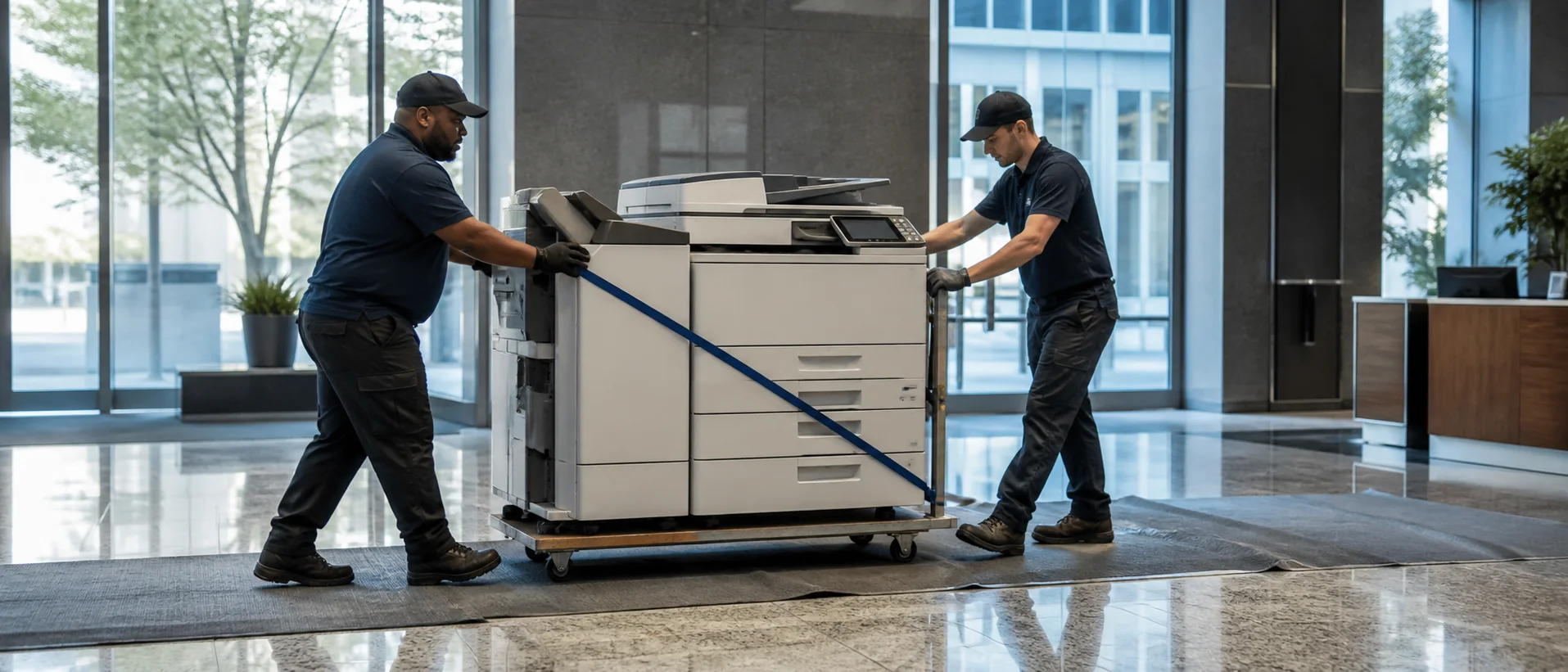
Charleston copiers for lease should be compared with purchase proposals for port and logistics operators, aerospace companies, healthcare providers, tourism and hospitality groups, universities, technology firms, government agencies and professional offices. Shipping documents, technical packets, patient forms and guest materials create different uptime, color and security needs. A useful Charleston County comparison tests those workflows and includes coastal continuity.
Specify Charleston copiers for port, aerospace and guest work
Gather meters, tickets and real files from port, freight, aerospace, engineering, clinical, hospitality, academic, technology, public and professional users. Include bills of lading, maintenance manuals, quality packets, patient forms, guest material, course records, mixed scans, color presentations and confidential pages. Record outside work used during peaks or outages.
The A3 versus A4 copier comparison helps decide whether drawings, technical originals or event materials justify full-size capacity. Require exact controller, feeder, trays, finisher, color controls and software. Test a routine shipping, technical or patient packet end to end.
Port sites, hangars, hospitals, hotels, campuses and downtown offices have different docks, shifts, security and parking. Facilities, safety, IT and users should approve installation.
Compare Charleston copier prices through shipping and visitor peaks
Request equipment price, lease total, service base, included pages, overages, supplies, applications, setup and training separately. Add annual increases, taxes, parking, credentials, after-hours labor, relocation, sanitization and return freight. The office copier cost guide keeps workflow and route obligations visible.
Model routine demand plus vessel schedules, production, clinical, event, tourism and fiscal peaks. Ask whether pages can be pooled and where technicians and common parts are stocked. Compare leasing versus purchasing copiers over one useful period.
Require invoices by serial and property. Keep accepted options, subscriptions, minimums, service credits and notice dates together.
Secure Charleston records and plan coastal continuity
IT should test identity, secure release, OCR and approved logistics, technical, clinical or business repositories. Review encryption, administrator roles, firmware, logs, retention and data removal. The copier service contract guide helps assign labor, parts and workflow responsibility.
Ask which technicians cover each property and who owns a fault involving device, identity or repository. Define alternate output for shipping, production, patient care, guests, payroll and public deadlines.
References should match secured or hospitality access and integrations. Preserve accepted files, color settings and results. Charleston continuity plans should address weather-related closures, delayed freight, temporary equipment authorization and data handling when normal delivery routes are unavailable.
Test the contact list before storm season and after staffing changes. Price emergency configuration in advance so a replacement can reproduce the critical workflow rather than merely print.
Guest-facing teams should also define color approval with representative event and visitor files on the actual stock. Record controller settings, finishing and the person authorized to accept output. This repeatable Charleston standard helps temporary or replacement equipment reproduce essential materials without undocumented adjustments, outside production or a last-minute dispute during a busy visitor period.
Price one complete Charleston copier requirement.
Compare equipment, workflow, cost and recovery on equal terms.