
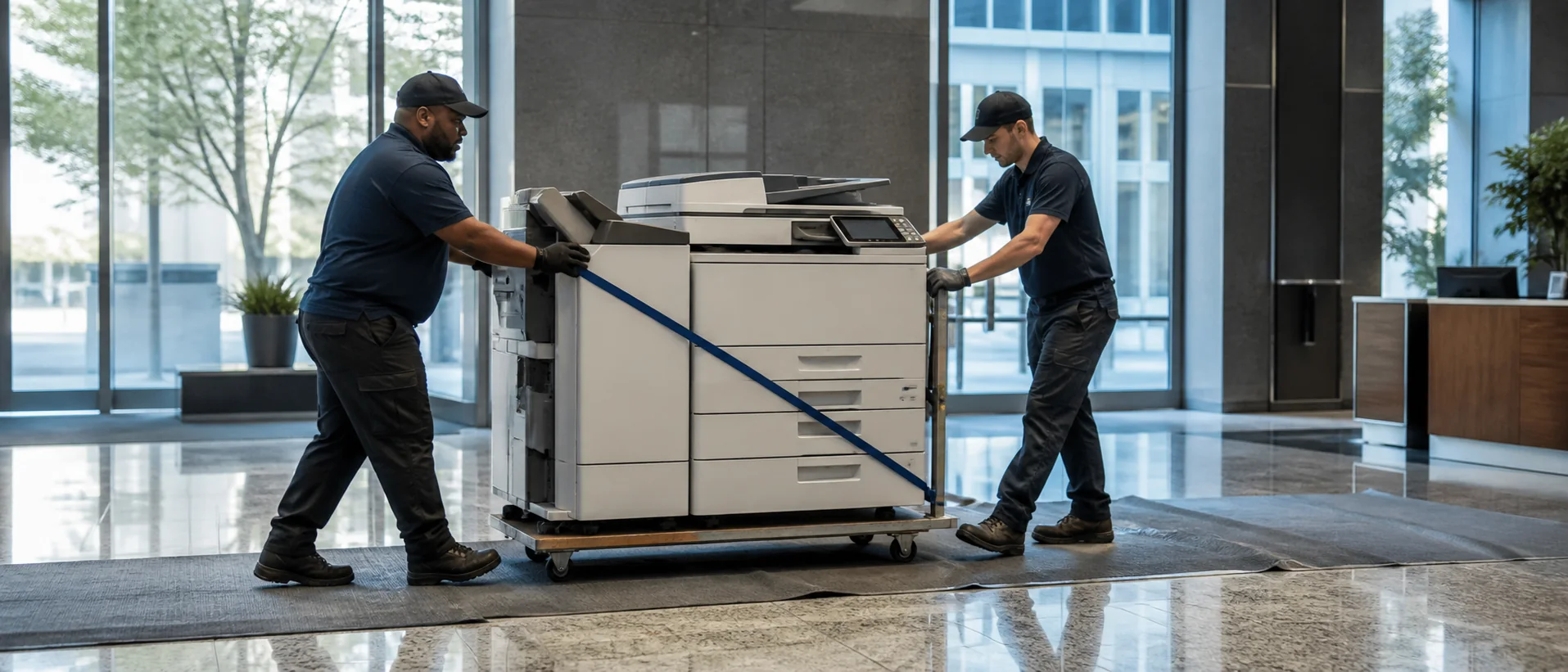
Jackson office copier dealer proposals should fit healthcare providers, manufacturers, distribution and logistics operators, agriculture and food businesses, schools, retailers, government agencies and professional offices. Patient packets, quality records, shipping papers and public files create different capacity and privacy requirements. A useful Madison County comparison tests those workflows and includes realistic regional service.
Specify Jackson copiers for clinical, production and distribution work
Gather meters, tickets and actual files from healthcare, manufacturing, freight, agriculture, food, academic, retail, public and professional users. Include patient forms, work orders, quality records, shipping papers, food documents, course packets, invoices, mixed scans and confidential pages. Record output moved during peaks or outages.
The office copier sizing guide connects simultaneous users, feeder batches and finishing to useful capacity. Require exact model, controller, drawers, finisher and software. Test a normal patient, quality or shipping packet through secure release, OCR and retrieval.
Hospitals, plants, warehouses, food facilities, schools and public buildings have different loading, sanitation, parking and hours. Facilities, safety, IT and users should approve installation.
Compare Jackson copier prices through production and harvest cycles
Request equipment price, lease total, maintenance base, included pages, overages, supplies, applications, setup and training separately. Add annual increases, taxes, travel, after-hours labor, moves, data removal and return freight. The office copier price guide keeps route and workflow costs visible.
Model routine demand plus clinical, production, harvest, food, shipping, enrollment and fiscal peaks. Ask where technicians and common parts are based and whether pages can be pooled. Compare leasing versus purchasing a copier over one useful life.
Require invoices by serial and location. Keep accepted configurations, subscriptions, minimums, mileage terms, escalation and notice dates together.
Secure Jackson records and prepare practical backup output
IT should test identity, secure print, OCR and approved clinical, production, logistics or public repositories. Review encryption, administrator roles, firmware, logs and sanitization. The copier service agreement guide helps assign parts, labor and application responsibility.
Ask which technicians cover the property and who owns a fault involving device, identity or repository. Define alternate output for patient care, production, food compliance, shipping, payroll and public deadlines.
References should match regional routes and integrations. Preserve accepted files, barcode behavior and results. Jackson organizations adding a clinic, warehouse or branch should price surveying, installation, secure destinations and training before award.
A written move-and-add schedule keeps growth from becoming an expensive exception and requires the same acceptance test at the new address.
Food and manufacturing teams should document specialty stock, barcode behavior, long feeder batches and the maximum interruption at each quality or shipping station. Ask dealers to demonstrate those files during a normal shift and retain accepted settings. This turns a broad response promise into a measurable Jackson recovery standard and makes temporary equipment useful sooner.
Retest the accepted jobs after network, application or production-process changes.
Review annually.
Price one complete Jackson copier requirement.
Compare equipment, workflow, cost and recovery on equal terms.