
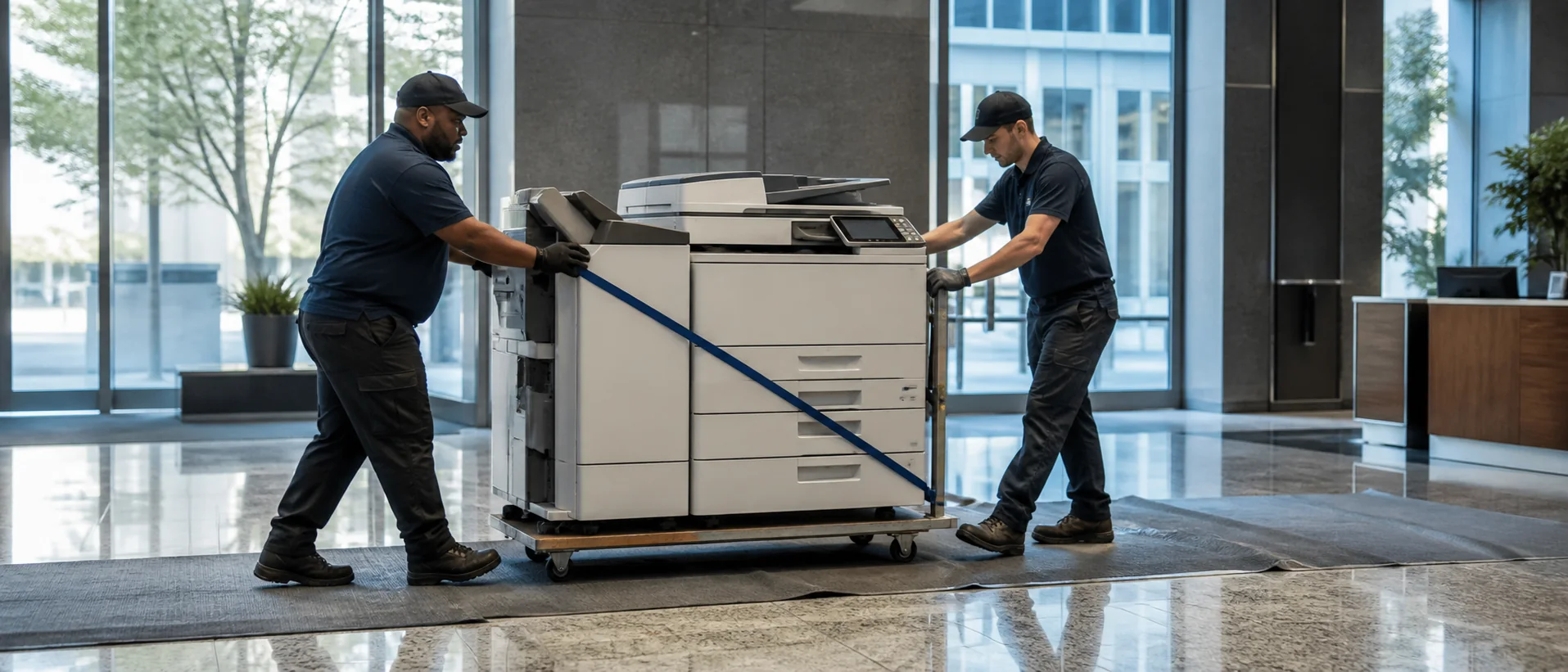
Pasadena office copier dealer proposals should be built around the document work performed by petrochemical and refining operations, manufacturers, port and logistics companies, healthcare providers, schools, contractors, government agencies and professional offices. Safety packets, bills of lading, quality records and patient documents place very different demands on a multifunction copier. A useful southeast Harris County comparison prices secure workflows, shift coverage and recovery instead of selecting a machine from speed alone.
Specify Pasadena copiers for industrial, logistics and clinical work
Gather meters, service tickets and representative files from refinery offices, plants, freight teams, clinics, schools, project groups and administrative departments. Include safety manuals, permits, quality packets, shipping documents, patient forms, construction sets, mixed-size scans and confidential records. Note which jobs leave the building when a device is unavailable.
The copier speed guide helps connect simultaneous shift changes, receiving work and scan queues to useful throughput. Require the exact model, controller, feeder, trays, finisher and applications in every proposal. Test a normal safety, freight or clinical packet through authentication, OCR and its final repository.
Plants, terminals, clinics and campuses have different docks, credentials, safety orientations and approved work windows. Facilities, safety, IT and daily users should approve the delivery route and acceptance test before purchase.
Compare Pasadena copier pricing across shifts and service zones
Separate purchase price or lease payments from the service base, included pages, overages, supplies, software, installation and training. Add annual increases, taxes, travel, after-hours labor, moves, data removal and return freight. The commercial copier pricing guide keeps those obligations visible beside the hardware number.
Model ordinary demand plus turnarounds, audits, shipping peaks, clinical deadlines, school cycles and major projects. Ask where technicians and common parts are based, how priority calls are defined and whether pages can be pooled across Pasadena properties. Compare copier leasing and purchasing over one realistic replacement period.
Require invoices by serial number, location and cost center. Keep the accepted configuration, subscriptions, minimums, escalation contacts and notice dates with the agreement.
Protect Pasadena records and verify industrial recovery
IT should test identity, secure release, OCR and approved safety, production, logistics or clinical repositories. Review encryption, administrator access, firmware, logs, retention and end-of-term sanitization. The copier security checklist supports confidential operational and patient information.
Ask which technicians can enter each secured site and who owns a failure involving the device, identity provider or document destination. Define backup output for safety, shipping, patient care, payroll and regulated deadlines.
References should match industrial access and the applications being proposed. Preserve accepted sample files, barcode behavior, destination names and test results. Before installation, document the entrance, dock schedule, safety requirements, power, network owner and person who signs off each workflow.
Price emergency delivery and after-hours access before award. Require temporary or replacement equipment to reproduce the approved process, then retest it after network or application changes.
Price one complete Pasadena copier requirement.
Compare equipment, workflow, cost and recovery on equal terms.