
Utah office copier dealer proposals should reflect technology and finance offices along the Wasatch Front, healthcare networks, universities, manufacturers, distribution centers, mining and energy operations, tourism businesses and public agencies. Contracts, patient files, engineering records and guest material require different security, media and recovery. A statewide comparison should price mountain routes, branch support and tested document workflows as carefully as equipment.
Build a Utah copier standard from real work at every site
Collect meters, tickets and representative files by address. Include contracts, financial reports, patient packets, course material, engineering drawings, production records, shipping documents, guest materials, public forms, mixed scans and confidential pages. Record desktop and outsourced output used during peaks or failures.
The office copier buyer’s guide helps translate those files into capacity, feeding, finishing and acceptance tests. Require exact models, controllers, drawers, finishers and workflow software for every facility. Test an ordinary financial, clinical, technical or public packet through secure release, OCR and approved retrieval.
Downtown towers, hospitals, plants, resorts, campuses, warehouses and remote operations have different loading, security, weather and technician-access conditions. Facilities, IT, records owners and daily users should approve delivery and acceptance.
Compare Utah copier prices with routes, growth and peaks included
Separate purchase price or lease total from the service base, included pages, overages, supplies, applications, implementation and training. Add annual increases, taxes, travel zones, after-hours labor, moves, data removal and return freight. The commercial copier price guide keeps route and workflow costs visible.
Model normal demand plus tax, clinical, tourism, enrollment, production, construction and shipping peaks. Ask whether pages can be pooled, where technicians and parts are based and how canyon or winter travel changes response. Compare copier leasing versus purchasing across one useful life.
Require invoices by serial, site and department. Keep approved configurations, subscriptions, minimums, mileage provisions, service credits and notice dates together.
Protect Utah records and establish practical statewide recovery
IT should test authentication, secure print, OCR and approved financial, clinical, technical or public repositories. Review encryption, administrator privileges, firmware, logs, retention and sanitization. The copier security checklist supports protected and proprietary information.
Ask providers to map technicians, parts, credentials, hours and escalation for every location. Define alternate output for patient care, transactions, production, guests, payroll and public deadlines. Name approved temporary equipment and who may authorize site access.
References should match Utah geography and the proposed integrations. Preserve accepted files, profiles and results with each asset. Price moves and additions before award so a new branch, clinic or project office follows the same secure standard.
Review the statewide record after important staffing, identity, application or location changes. Retest critical files instead of assuming the original configuration still works.
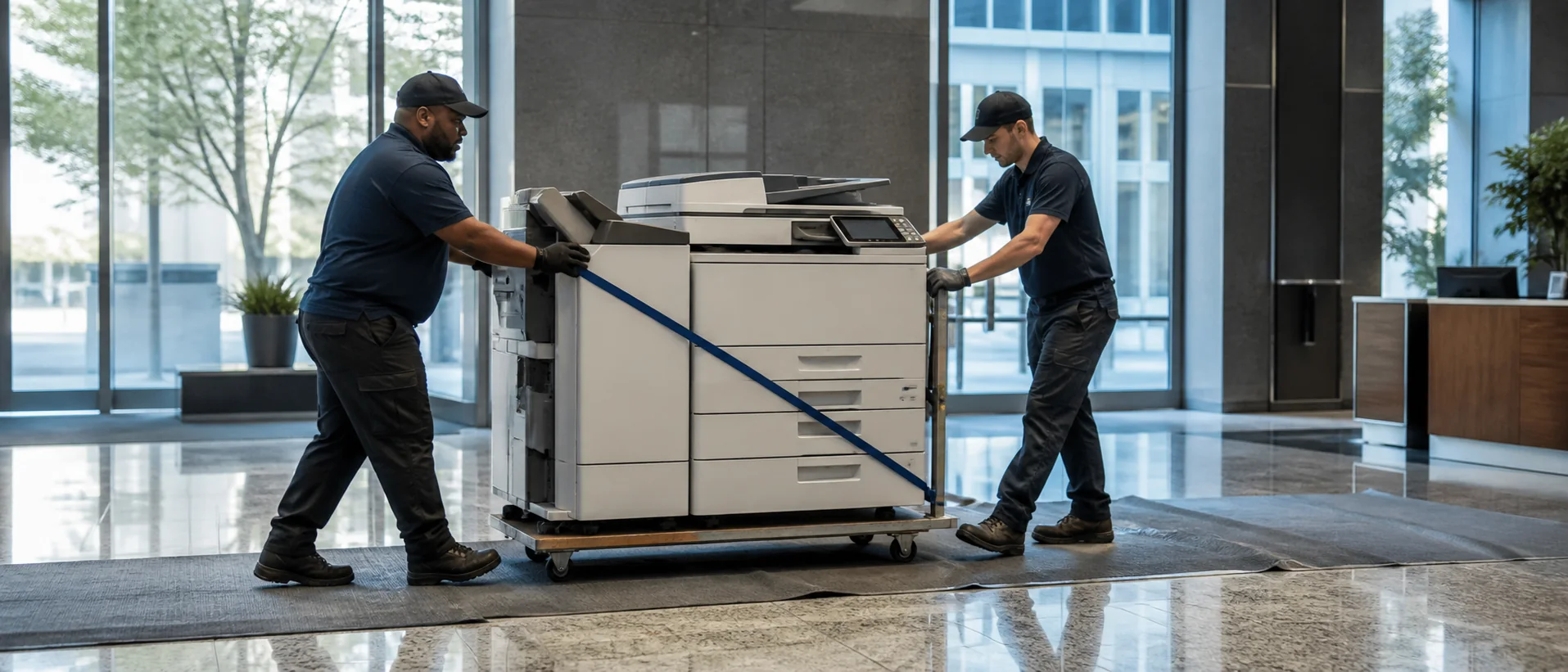
Before delivery, document the receiving entrance, floor path, power, connectivity and local person who validates every destination. Requiring the same walkthrough throughout Utah gives dealers one completion standard and prevents a mountain property, secured facility or missing application owner from becoming an unexpected charge.
Price one statewide requirement without hiding local work.
Compare equipment, workflow, cost and recovery on equal terms.