
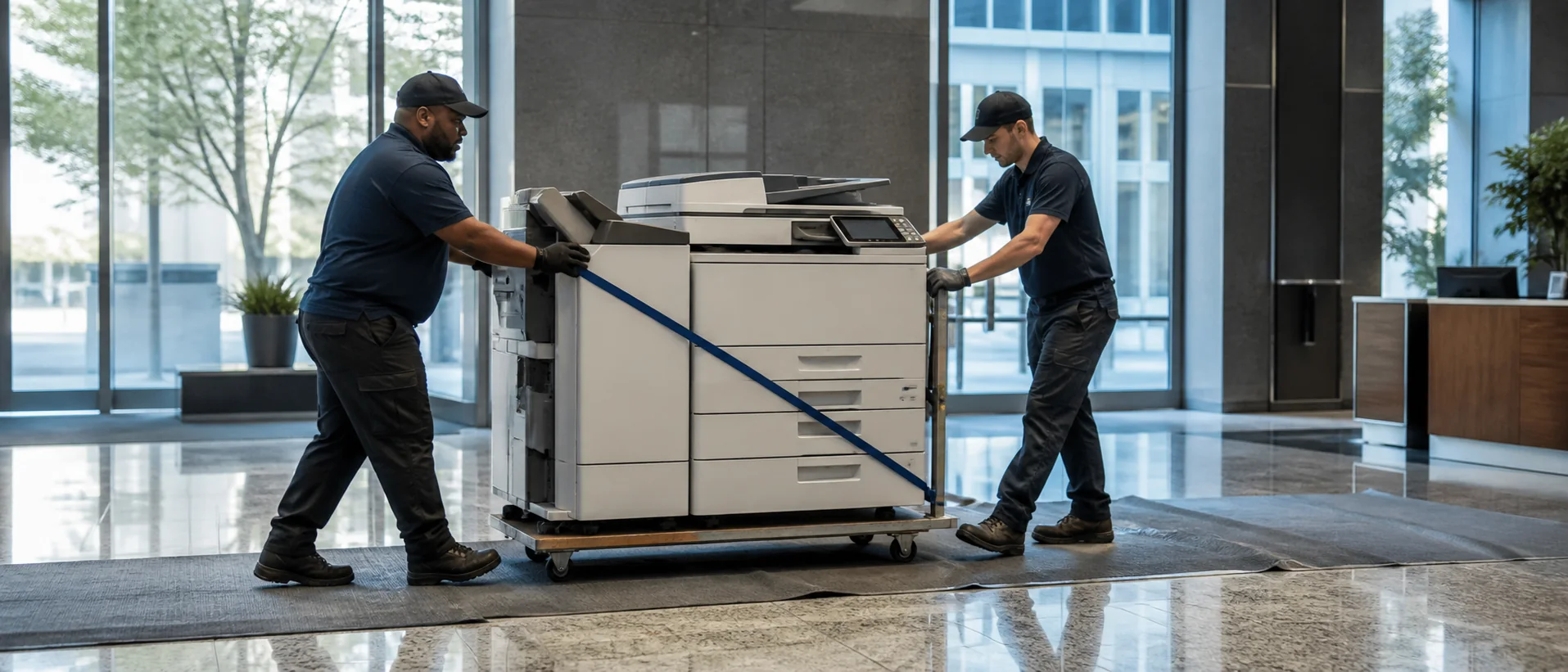
New Berlin copiers for sale should be evaluated beside lease options for manufacturers, distribution centers, construction firms, healthcare providers, engineering companies, schools, retailers and business-service offices. Work orders, shipping papers, plans and patient forms require different feeding, security and recovery. A practical Waukesha County comparison includes industrial shifts, metro routes and tested workflows.
Build New Berlin copier needs for production and distribution
Collect meters, ticket history and representative files from manufacturing, warehouse, construction, clinical, engineering, academic, retail and professional users. Include work orders, quality packets, shipping papers, pick records, plans, permits, patient forms, mixed scans and confidential pages. Record output moved during outages.
The A3 versus A4 copier comparison helps determine whether plans and technical originals justify full-size capacity. Require exact controller, feeder, trays, finisher and applications. Test a normal quality, shipping or project packet through authentication, OCR and retrieval.
Plants, warehouses, clinics, schools and project offices have different docks, shifts and safety. Facilities, IT and users should approve installation.
Compare New Berlin copier prices across facilities and shifts
Separate purchase price, lease total, service base, included pages, overages, supplies, software, setup and training. Add annual escalators, taxes, after-hours labor, travel, moves, sanitization and return freight. The office copier cost guide keeps workflow and metro service visible.
Model normal demand plus production, shipping, construction, clinical and fiscal peaks. Ask where technicians and parts are based and whether pages can be pooled. Compare lease versus purchase costs over one realistic life.
Require invoices by serial and facility. Store approved configurations, subscriptions, minimums, escalation contacts and notice dates together.
Secure New Berlin records and verify industrial continuity
IT should test identity, secure release, OCR and approved production, logistics, project or clinical repositories. Review encryption, administrator privileges, firmware, logs and data removal. The copier security guide supports technical and protected information.
Ask which technicians cover every shift and who owns a fault involving device, identity or repository. Define backup output for quality, receiving, shipping, projects, patient care and payroll.
References should match industrial access and integrations. Preserve approved barcode files, plans, long scan batches and results. New Berlin teams should establish the maximum interruption at production, quality and dispatch stations.
Document dock schedules, safety requirements, power, connectivity and local validators. Test loaner equipment during the same shift, price emergency delivery in advance and retest after application changes.
Manufacturing and distribution teams should keep approved barcode samples, plan files, quality packets and long feeder jobs with every asset. Record destination settings and the person who accepts the result. This evidence lets New Berlin users validate temporary equipment during the same shift instead of discovering missing workflows during production or shipping.
Define administrator access, stored-job retention and end-of-term sanitization before approval, then preserve signed evidence. Review it with security and local operational workflow owners annually.
Price one complete New Berlin copier requirement.
Compare equipment, workflow, cost and recovery on equal terms.