
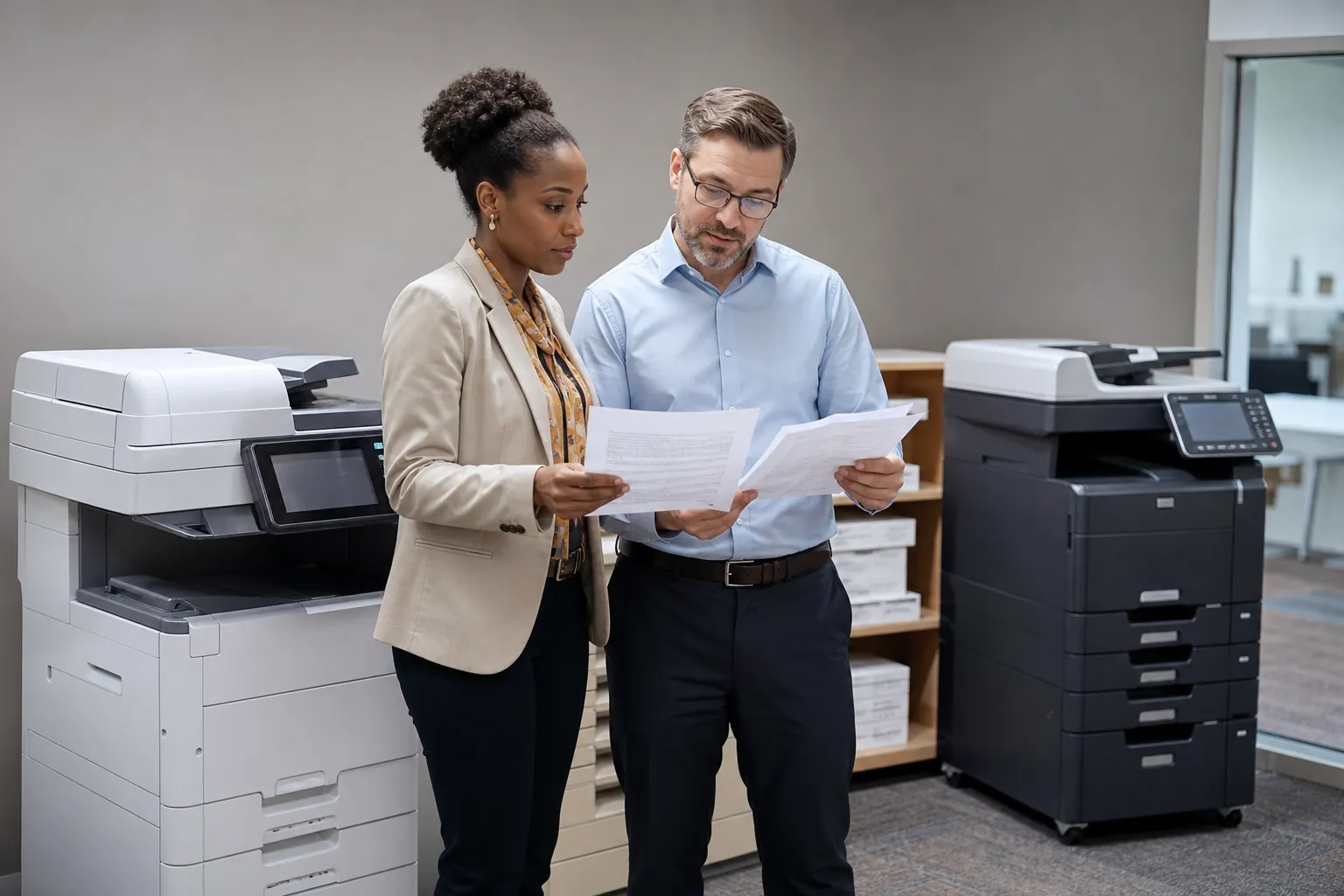
How much does a commercial office copier cost per month in 2026?
A commercial office copier can range from a few hundred dollars per month for a compact business-class lease to well over $1,000 per month for a faster color A3 or production configuration. Service, page allowances, overages, taxes and options may be separate, so compare the complete monthly operating amount and total term payments.
Use this answer to define the requirement, expose meaningful differences among proposals and verify the equipment, service or contract term that supports each claim.
Build the 2026 monthly copier cost from the complete configuration
Price the exact machine, feeder, trays, finisher, software and installation first. Then add financing or lease payment, service base, included pages, black-and-white and color overages, taxes and recurring licenses. Use expected and peak volume. A low advertised payment often represents a base device or long term and cannot be compared until every recurring charge is shown.
Turn this copier question into a written requirement
Write the answer into the request for proposal, including the measurement or contract term that proves it. Ask every provider to identify the exact option, setting, service obligation or workflow assumption behind the recommendation. Keep the response with the configuration sheet for installation and future account reviews.
Separate equipment price from operating cost
Show the cash purchase price or financed equipment amount separately from maintenance. For service, record the base charge, included pages, monochrome and color overage rates, annual escalation and exclusions. Add delivery, installation, training, taxes and any software subscriptions.
A true comparison uses the same period and volume assumptions. Review copier cost per page alongside the acquisition price.
Price the equipment around one clear workload.
Give providers the same volume, paper, scanning, finishing and service brief.
Put the promise into the equipment and service proposal
Require the provider to identify the model, accessory, setting, software, service obligation or contract clause that makes the answer true. Put recurring subscriptions and exclusions beside the equipment price. If the result depends on work after delivery, assign the responsible party, completion date and acceptance test before approving the proposal.
Plan for changes during the copier life cycle
Consider higher and lower volume, staff changes, office moves, software updates and the eventual return, resale or retirement of the machine. Identify which parts of the configuration can expand and which require replacement. A decision is stronger when the exit path is understood before the first invoice arrives.
Check the provider behind the copier configuration
Ask how the dealer installs this requirement, trains users, stocks parts and handles repeated problems. Compare response territory, escalation and continuity rather than accepting a general service promise. The exact hardware matters, but the provider determines whether its capabilities remain available during daily work.
Connect this answer to the complete copier decision
Research how much does a commercial office copier cost per month in 2026 alongside the office copier prices guide, copier lease versus buy comparison, Office Copier Buyer’s Guide, current copier brand guide and local copier pricing directory. Use the office copier answer library for narrower contract and feature questions, then carry one consistent requirement into the copier quote request.
- Exact model and installed accessories
- Purchase price or amount financed
- Lease term and total payments
- Service base and included pages
- Black-and-white and color overage rates
- Delivery, setup, training and recurring fees
Related buyer questions worth resolving
Closely connected decisions include What are the hidden costs of a copier lease, What size office copier do I need, Should I buy a new or used office copier and What security features should an office copier have. Resolve them before comparing final proposals so price, capacity, service and contract assumptions stay aligned.
