
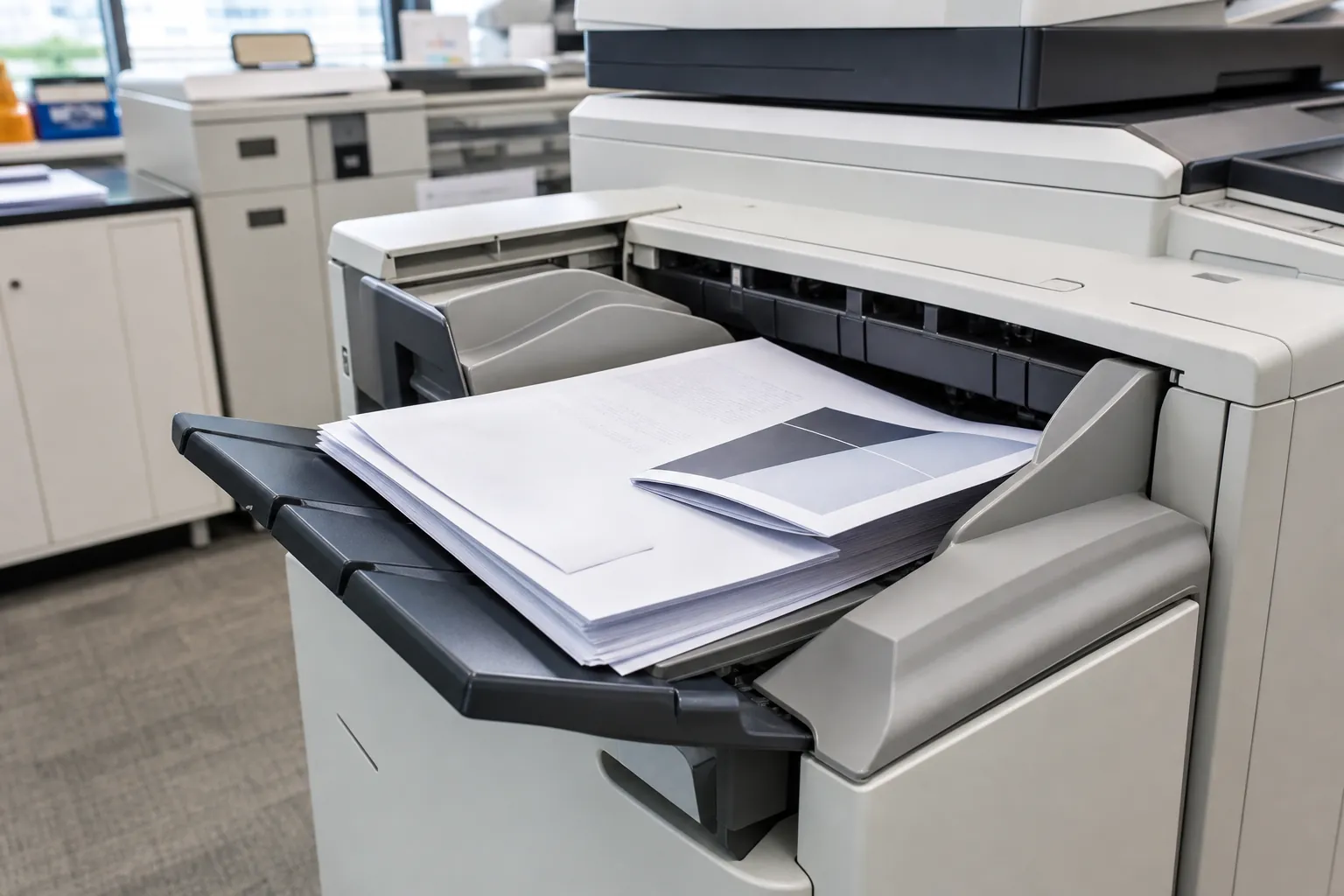
How much does a production copier cost?
Production copier cost can range from tens of thousands of dollars to substantially more for high-speed color, specialized media, controllers and advanced finishing. Monthly financing may run from the high hundreds into several thousand dollars. The useful comparison includes installation, workflow software, service, click charges and operator requirements.
Use this answer to define the requirement, expose meaningful differences among proposals and verify the equipment, service or contract term that supports each claim.
Price a production copier as a complete output system
Define sustained volume, job length, media, color requirements, finishing, variable data and turnaround before comparing engines. Test representative production work and record actual throughput and intervention. Itemize controller, feeders, stackers, finishers, software, electrical or environmental work, training, service minimums and click charges.
Turn this copier question into a written requirement
Write the answer into the request for proposal, including the measurement or contract term that proves it. Ask every provider to identify the exact option, setting, service obligation or workflow assumption behind the recommendation. Keep the response with the configuration sheet for installation and future account reviews.
Build an apples-to-apples office copier price comparison
Start with average and peak monthly pages, regular users, black-and-white versus color volume, required paper sizes, scan destinations and finishing. Give that same brief to every provider. An advertised copier price may represent a base unit without trays, feeder, finisher, delivery, network setup or service.
Use the complete office copier prices guide to establish realistic equipment classes and total-cost questions before requesting proposals.
Price the equipment around one clear workload.
Give providers the same volume, paper, scanning, finishing and service brief.
Account for peak demand and exceptions
Average monthly use can hide deadline days, large scan packets, specialty paper or departments that cannot wait. Describe the busiest credible condition and the exceptions that require another process. The right proposal handles normal work efficiently and has a deliberate answer for peaks instead of being permanently oversized.
Start with evidence from the current office workflow
Collect meter history, job samples, user complaints, paper purchases and service tickets before changing equipment. Separate recurring needs from one unusual project. A measured baseline helps providers size the proposal and gives the business a way to judge whether the new copier actually improves cost, speed or reliability.
Check the provider behind the copier configuration
Ask how the dealer installs this requirement, trains users, stocks parts and handles repeated problems. Compare response territory, escalation and continuity rather than accepting a general service promise. The exact hardware matters, but the provider determines whether its capabilities remain available during daily work.
Connect this answer to the complete copier decision
Research how much does a production copier cost alongside the office copier prices guide, copier lease versus buy comparison, Office Copier Buyer’s Guide, current copier brand guide and local copier pricing directory. Use the office copier answer library for narrower contract and feature questions, then carry one consistent requirement into the copier quote request.
- Exact model and installed accessories
- Purchase price or amount financed
- Lease term and total payments
- Service base and included pages
- Black-and-white and color overage rates
- Delivery, setup, training and recurring fees
Related buyer questions worth resolving
Closely connected decisions include How long does an office copier last, How much does it cost to lease an office copier, What is the difference between an A3 and A4 copier and What happens at the end of a copier lease. Resolve them before comparing final proposals so price, capacity, service and contract assumptions stay aligned.