
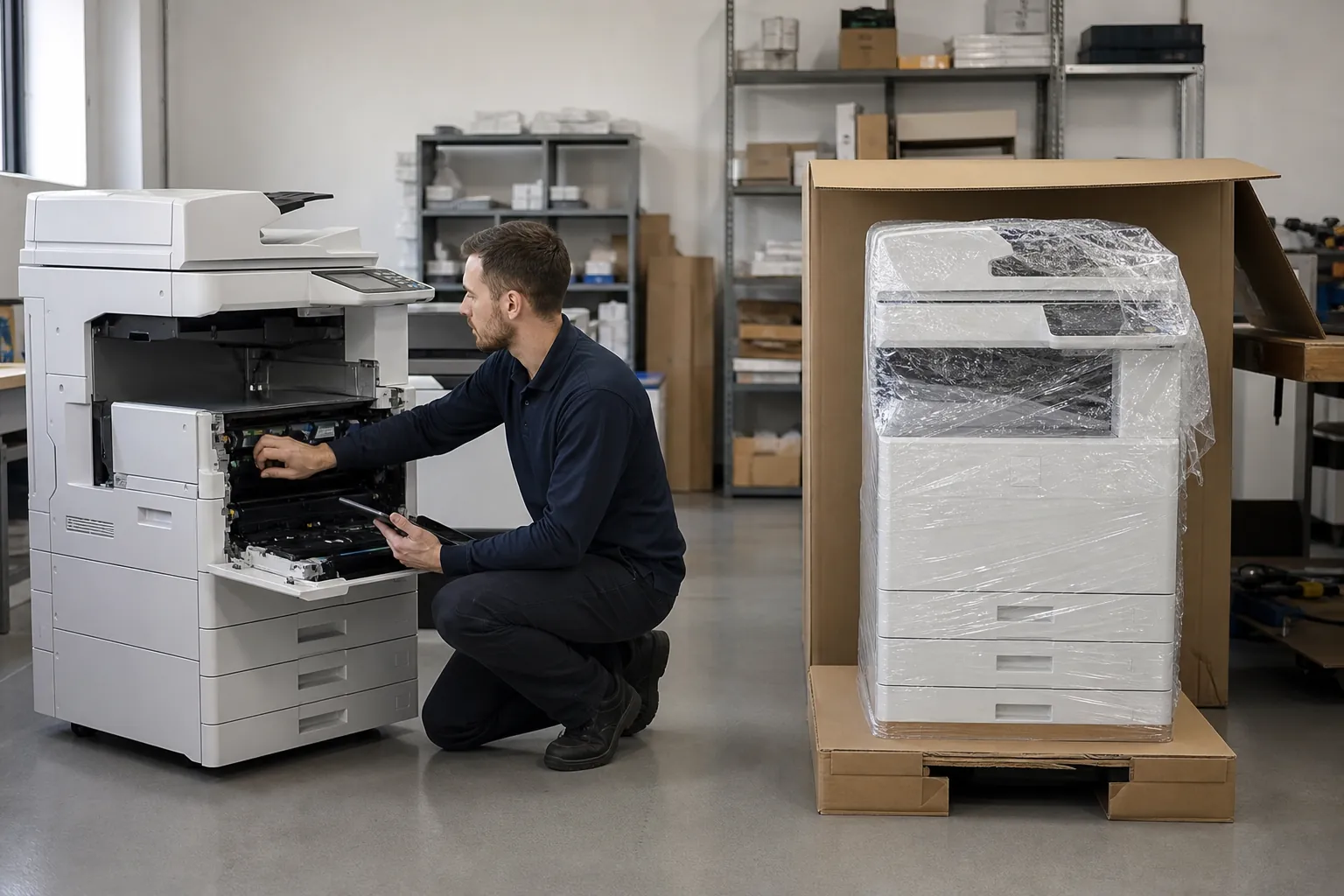
What is the best office copier for a construction company?
A construction company usually needs a durable business-class multifunction copier with strong scanning, searchable files, secure project destinations, reliable service and paper handling matched to contracts, submittals and field records. A3 or 11-by-17 capability matters only when teams regularly print plans or oversized schedules. Test real project packets before choosing.
Use this answer to define the requirement, expose meaningful differences among proposals and verify the equipment, service or contract term that supports each claim.
Match a construction copier to project documents and jobsite conditions
Separate headquarters and temporary-site needs. Compare:
- 11-by-17 plans, contracts and mixed originals
- Fast duplex scanning with searchable PDF or OCR
- Named project folders and secure cloud destinations
- Dust, power, connectivity and trailer space
- Move terms and regional technician coverage
- Backup output for bid and submittal deadlines
Use the A3 versus A4 copier guide to avoid paying for unused large-paper capability. Include every project address when requesting construction office copier prices.
Measure office copier workload before selecting a model
Use several representative months of meter or print-management data. Separate black-and-white and color impressions, identify busy periods and include work currently outsourced. Maximum duty cycle is not a substitute for a recommended operating range.
Use the office copier sizing guide to structure the review.
Turn this copier question into a written requirement
Write the answer into the request for proposal, including the measurement or contract term that proves it. Ask every provider to identify the exact option, setting, service obligation or workflow assumption behind the recommendation. Keep the response with the configuration sheet for installation and future account reviews.
Price the equipment around one clear workload.
Give providers the same volume, paper, scanning, finishing and service brief.
Plan for changes during the copier life cycle
Consider higher and lower volume, staff changes, office moves, software updates and the eventual return, resale or retirement of the machine. Identify which parts of the configuration can expand and which require replacement. A decision is stronger when the exit path is understood before the first invoice arrives.
Account for peak demand and exceptions
Average monthly use can hide deadline days, large scan packets, specialty paper or departments that cannot wait. Describe the busiest credible condition and the exceptions that require another process. The right proposal handles normal work efficiently and has a deliberate answer for peaks instead of being permanently oversized.
Start with evidence from the current office workflow
Collect meter history, job samples, user complaints, paper purchases and service tickets before changing equipment. Separate recurring needs from one unusual project. A measured baseline helps providers size the proposal and gives the business a way to judge whether the new copier actually improves cost, speed or reliability.
Connect this answer to the complete copier decision
Research what is the best office copier for a construction company alongside the office copier prices guide, copier lease versus buy comparison, Office Copier Buyer’s Guide, current copier brand guide and local copier pricing directory. Use the office copier answer library for narrower contract and feature questions, then carry one consistent requirement into the copier quote request.
- Average and peak monthly pages
- Users and typical job size
- Color and paper-size requirements
- Scanning and finishing workflow
- Security and administration
- Complete equipment and service cost
Related buyer questions worth resolving
Closely connected decisions include What is the difference between a copier and a multifunction printer, How long does an office copier last, How much does it cost to lease an office copier and What is the difference between an A3 and A4 copier. Resolve them before comparing final proposals so price, capacity, service and contract assumptions stay aligned.
