
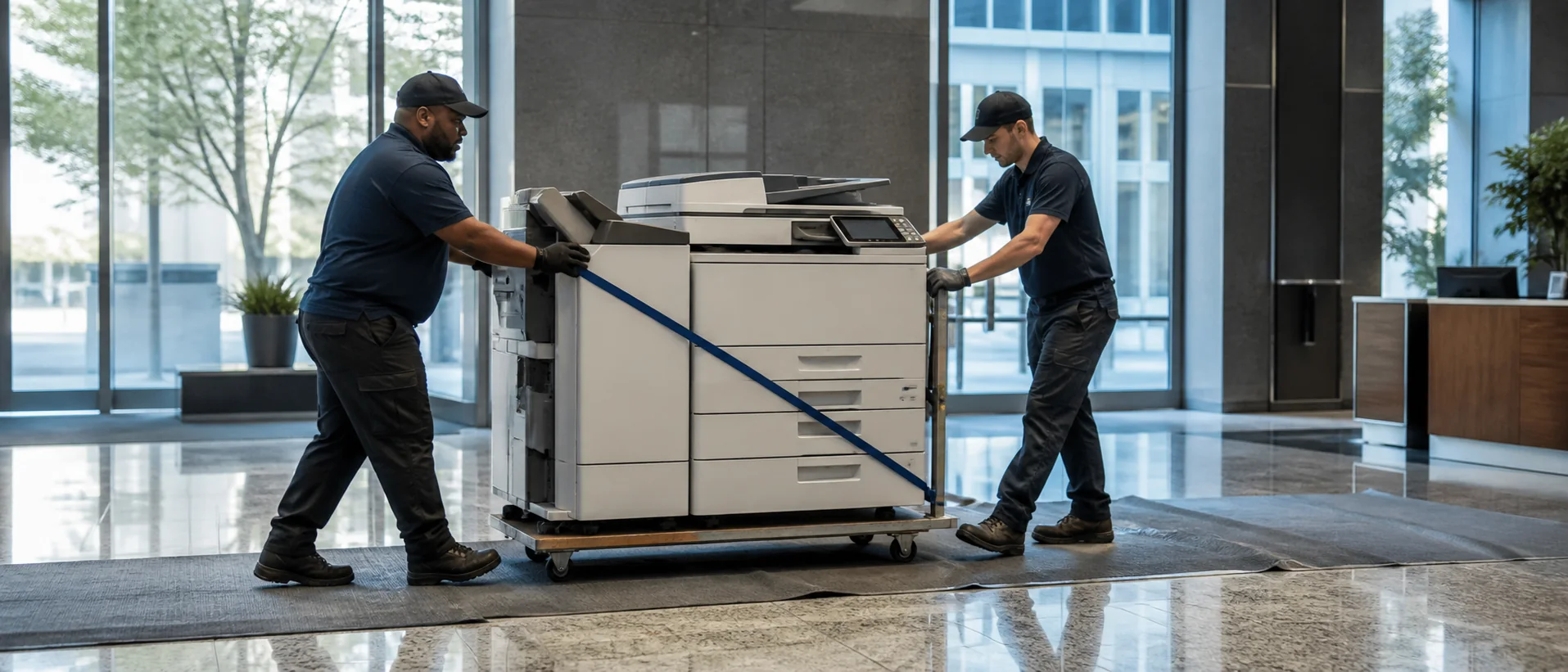
Quotes from Evansville office copier dealers should be compared with lease proposals around the work of healthcare providers, manufacturers, energy and engineering firms, river and regional logistics, universities, finance, government and professional offices. Patient forms, quality packets, shipping documents and technical records create different scan and outage risks. A strong southwest Indiana request measures those jobs and makes technician origin, parts and full recovery explicit.
Commercial Copier Dealers in Evansville
Office copier dealers in Evansville can help you choose commercial copiers for your office size, printing needs and budget. Gather meters, tickets and actual files from clinical, engineering, quality, logistics, academic, public, finance and administrative users. Include patient packets, inspection records, technical reports, shipping papers, contracts, mixed scans, color presentations and confidential employee pages. Record manual handling and output moved during downtime.
Use the A3 versus A4 copier guide to decide whether plans and larger operating originals justify a floor-standing system. Require exact feeder, controller, trays, finisher and workflow licenses. Test a normal patient, quality or shipping packet through OCR and retrieval.
Hospital campuses, plants, river-linked facilities, universities and public buildings have different loading, power and technician access. Facilities, safety, IT and daily operators should approve placement and acceptance. Include shift and clinical hours.
Compare Evansville Copier Dealer Prices and Lease Options
Compare Evansville office copier dealers on both the purchase or lease price and the cost of ongoing service. Separate equipment price, lease total, maintenance base, included pages, overages, supplies, software, setup and training. Add annual increases, taxes, travel, access, data removal and return freight. The office copier price guide keeps every service obligation visible.
Model routine demand plus clinical, production, shipping, academic, audit and fiscal-year peaks. Ask where technicians and uncommon parts originate and whether pages can be pooled across southwest Indiana sites. Compare copier leasing versus purchase over one useful life.
Require sample invoices and an asset schedule by address. Store serials, accepted options, subscriptions, minimums and notice dates together. Quarterly review should connect cost to supplies, response and complete workflows.
Local Copier Dealer Service in Evansville
Choose commercial copier dealers in Evansville with installation and support options that fit your business. IT should test identity, secure release, OCR and approved repositories. Review encryption, administrator roles, firmware, logs and sanitization. The copier service contract guide helps assign technical ownership.
Ask which technicians and parts serve each Evansville location and who owns a fault spanning the device, identity system or repository. Define alternate output for patient, quality, shipping, payroll, student or public documents. Severe-weather plans should name local contacts and backup equipment.
References should share similar clinical, production or travel requirements. Ask when users could complete the whole process and whether the repair lasted. Preserve accepted files, destination maps and a site-level continuity record.
Include records owners and floor users in the first review so paper, scan, permission and training problems are corrected before the next peak. Keep final recovery steps with the asset.
Keep a site-level continuity sheet naming priority documents, access contacts, approved alternate output and final recovery settings. Reuse it after network or staffing changes and before the next clinical or production peak.
Get Quotes from Copier Dealers in Evansville
Compare commercial copiers, purchase prices and lease options for your Evansville business.