
Indianapolis copiers for sale should be compared with lease proposals around the work of life-science and healthcare organizations, logistics companies, finance and insurance offices, technology teams, government, universities, legal firms, sports and hospitality groups. A medical campus, downtown tower, distribution operation and event property need different capacity and access. The comparison should measure each workflow and normalize exact equipment and metro service.
Build Indianapolis copier requirements by district and workflow
Gather meters, tickets and representative files from clinical, research, logistics, financial, legal, public, event and administrative teams. Include patient packets, study records, shipping documents, contracts, claims, mixed scans, color event material and confidential employee pages. Record hybrid occupancy and output moved between sites.
Use the copier sizing guide to connect simultaneous deadlines and feeder work to appropriate capacity. Require exact model, controller, trays, finisher and workflow licenses. Test a normal patient, shipping or client packet through secure release, OCR and retrieval.
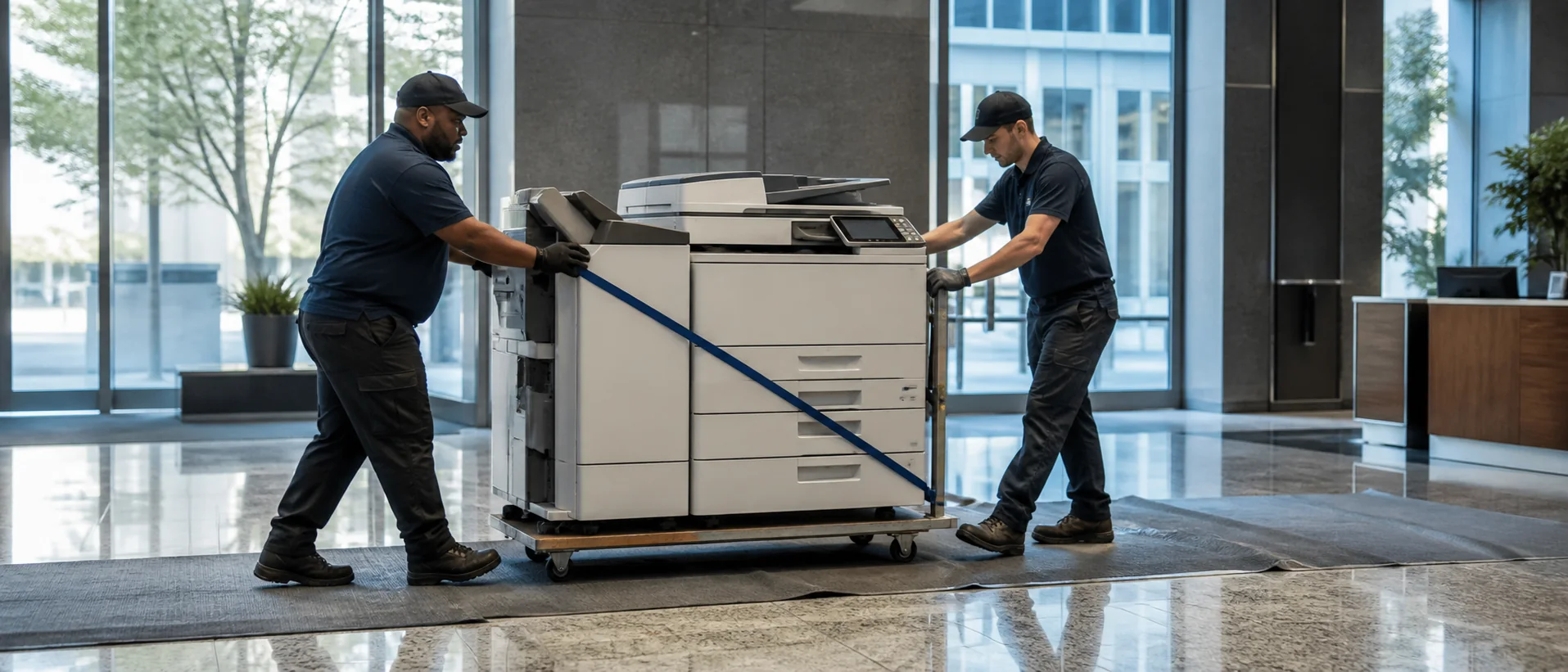
Downtown towers, hospitals, laboratories, warehouses, government buildings and event facilities have distinct loading, elevator, parking and security rules. Facilities, security, IT and daily users should approve each installation.
Compare Indianapolis copier cost through growth and events
Separate equipment price, lease total, service base, pages, overages, supplies, software, implementation and training. Add annual escalators, taxes, after-hours access, relocation, sanitization and return freight. The office copier pricing guide creates one auditable comparison.
Model routine hybrid demand plus clinical, research, shipping, transaction, event and fiscal-year peaks. Ask whether pages can be pooled across metropolitan offices and how expansion, consolidation or a move affects service. Compare copier leasing versus buying over one useful life.
Require invoices by asset and address. Keep serials, accepted configurations, subscriptions, minimums and notice dates together. Quarterly review should connect cost to occupancy, scan success, shift coverage and downtime.
Protect Indianapolis records and assign integration recovery
IT should test authentication, secure queues, OCR and approved repositories. Review encryption, administrator roles, firmware, logs and data removal. The copier service contract guide helps divide device and system ownership.
Ask which technicians cover each property, how they gain access and who owns a fault involving identity or a document platform. Define alternate output for patient, research, shipping, payroll, financial or public records.
References should share similar buildings, integrations or schedules. Ask when users could complete the full process and whether the correction lasted. Preserve accepted files, destination maps and a site-level continuity record.
Include records owners and daily operators in the first sixty-day review so finishing, permission, paper and invoice problems are corrected before the next event, peak or move.
Keep final recovery settings with every major asset.
Keep a building-level continuity record naming priority documents, security and loading contacts, supported alternate output and final recovery settings. Reuse it after a move, acquisition, driver update or major local identity and document-system change.
Compare Indianapolis copier prices with every site and workflow visible.
Compare one complete equipment, workflow and service requirement.