
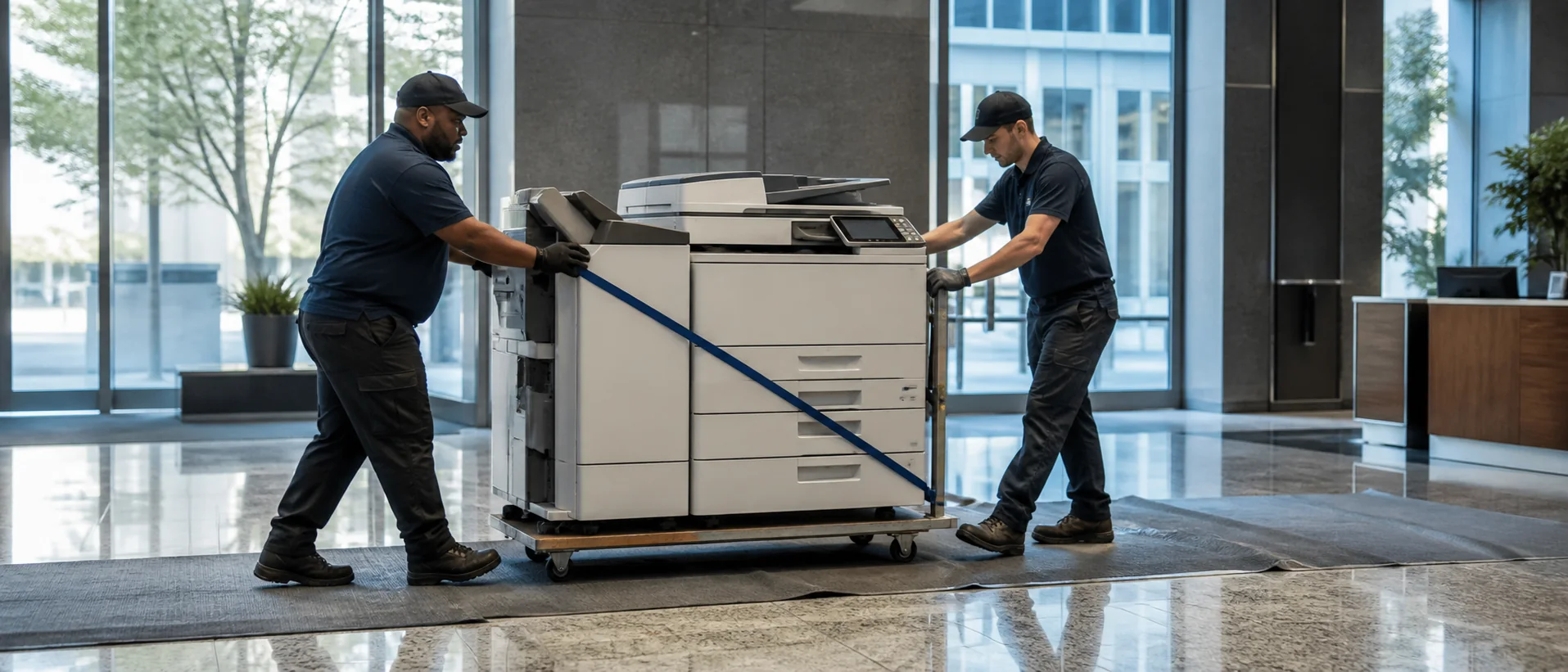
Massachusetts copiers for lease should be compared with purchase proposals using the records, security rules and support conditions at every address. Life-science and biotechnology companies, healthcare systems, universities, financial firms, technology teams, advanced manufacturers, government and professional offices create different workflows from Greater Boston through central and western Massachusetts. A statewide copier standard should align identity, reporting and contract terms while keeping each laboratory, hospital, campus, plant and client office requirement visible.
Build a Massachusetts copier standard for regulated knowledge work
Collect meters, service history and representative files by site. Include laboratory records, clinical forms, grant packets, financial reports, contracts, technical documents, mixed scans, color presentations and confidential employee pages. Record desktop and outsourced output because central fleet reports can omit work shifted during busy periods or system failures.
Use the commercial copier buyer’s guide to define approved capacity ranges and repeatable acceptance tests. Require exact model, controller, feeder, drawers, finisher and workflow licenses at every address. Test an ordinary research, patient, financial or production packet through authentication, secure release, OCR and approved retrieval.
Laboratories, hospitals, campuses, secured offices, plants and historic buildings have different loading, elevator, power and technician-access rules. Facilities, safety, security, IT and records owners should approve installation. Put credential needs, restricted spaces, operating hours and local contacts on the equipment schedule.
Compare Massachusetts copier purchases and leases on full cost
Separate cash price, finance or lease total, maintenance base, included pages, overages, supplies, software, implementation and training. Add annual increases, taxes, parking, security access, relocation, data removal and return freight. The office copier pricing guide prevents a missing workflow license or difficult site visit from appearing as savings.
Model routine demand plus grant, clinical, audit, academic, production and fiscal-year peaks. Ask whether pages can be pooled, which locations incur travel and how a lab, clinic or branch move changes service. Compare copier leasing versus buying over the same useful life.
Require sample invoices and device-level reporting. Store serials, accepted configurations, subscriptions, minimums and notice dates together. Quarterly review should connect cost to secure usage, supplies, downtime and completed workflows by site.
Protect Massachusetts information and verify end-to-end recovery
IT should test identity, secure print, OCR and approved repositories using actual records. Review encryption, administrator roles, firmware, logs, retention and sanitization. The copier security checklist supports health, research, financial, student, technical and personnel information.
Ask providers to map technicians, common parts, credentials, hours and escalation for every Massachusetts address. Define alternate output for patient care, research, coursework, production, payroll or client deadlines. A service call is incomplete until users can authenticate, scan and retrieve the intended document.
References should match the proposed integrations, access and hours. Ask when the full workflow returned and whether the correction lasted. Preserve accepted files, destination maps and expected results with each asset.
Include local records owners and frequent users in the first review so permissions, scanning, media, training and invoices receive the same measured attention as mechanical uptime.
Price one statewide requirement with local controls intact.
Compare equipment, workflow, cost and recovery on equal terms.