
Boston office copier dealer proposals should fit the work of healthcare and life-science organizations, universities, financial firms, law offices, technology companies, government agencies, hospitality businesses and professional services. Patient forms, research packets, transaction records and legal files create different security and deadline needs. A useful Boston comparison tests those documents and makes building access, integration and full workflow recovery part of the commercial offer.
Specify Boston copiers for research, healthcare and financial work
Gather meters, tickets and representative files from clinical, laboratory, academic, financial, legal, technical, public and administrative users. Include patient packets, research records, grant materials, statements, case files, mixed scans, color presentations and confidential employee pages. Record desktop output and work transferred to outside vendors.
The copier sizing guide connects simultaneous use, feeder batches and credible growth to appropriate capacity. Require exact model, controller, drawers, finisher and workflow software. Test a normal patient, research or financial packet through authentication, OCR and approved retrieval.
Hospitals, laboratories, campuses, historic properties and downtown towers have different loading, elevators, parking and security. Facilities, laboratory safety, IT and frequent users should approve placement and acceptance. Include clinical, research and extended office hours.
Compare Boston copier pricing across buildings and growth cycles
Request equipment price, lease total, maintenance base, included pages, overages, supplies, software, implementation and training separately. Add annual escalators, taxes, parking, escorts, relocation, data removal and return freight. The commercial copier cost guide makes those local obligations visible.
Model routine volume plus grant, clinical, audit, filing, enrollment and quarter-end peaks. Ask whether allowances can be pooled across Greater Boston sites and how a lab or office move changes the agreement. Compare copier leasing versus purchase over one useful life.
Require invoices by device and property. Store serials, accepted options, subscriptions, minimums and notice dates together. Review utilization after the first clinical, academic or financial peak.
Secure Boston records and verify complete restoration
IT should test identity, secure release, OCR and approved clinical, research, financial or legal repositories. Review encryption, administrator privileges, firmware, logs and sanitization. The office copier security guide supports regulated and confidential information.
Ask which technicians and parts serve each property, how secured buildings grant access and who owns a fault involving the copier, identity system or repository. Define alternate output for patient care, research, trades, court, payroll or public deadlines.
References should share similar access, integrations and operating hours. Ask when users could complete their full task and whether the correction held. Preserve accepted files, destination maps and a property-level continuity record.
Boston organizations expanding between laboratories, clinics and client offices should price foreseeable moves before signing. Document surveys, secure configuration, destination migration, acceptance and page pooling rather than negotiating each change under deadline.
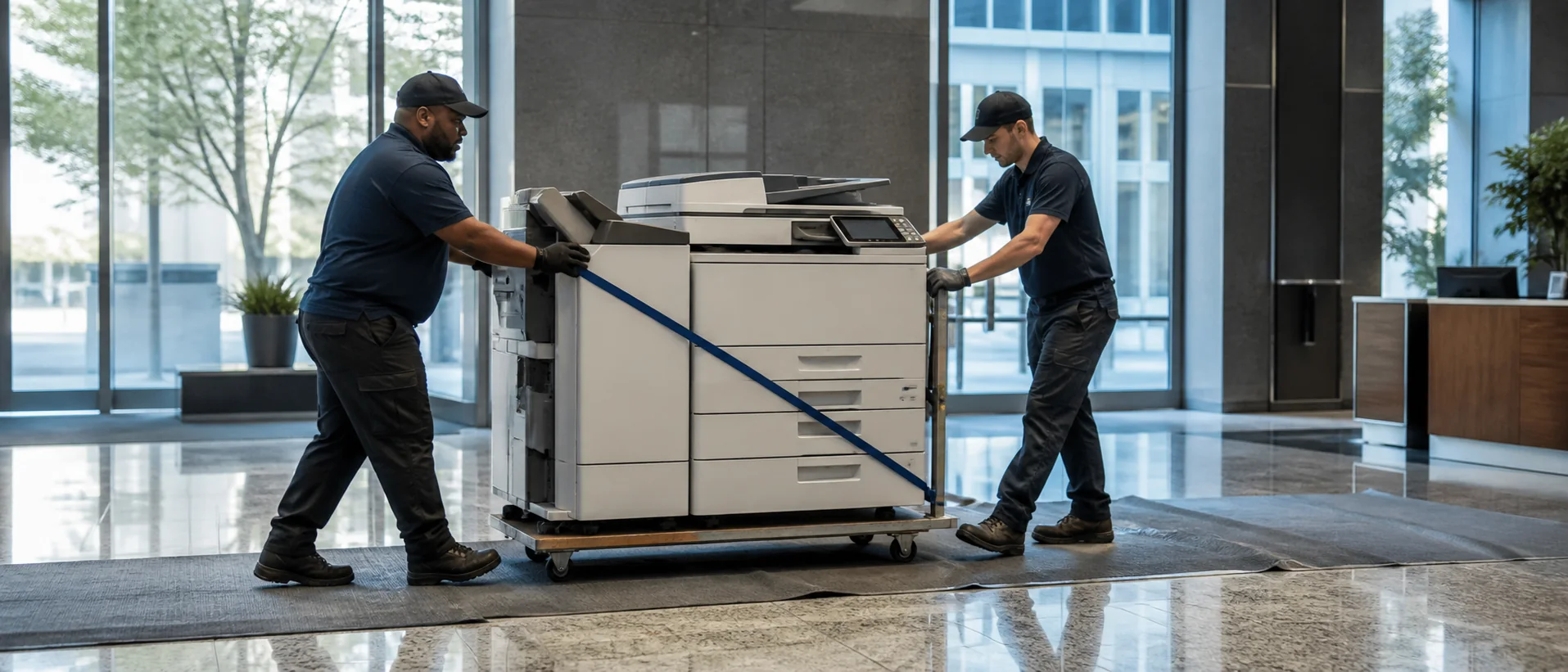
Before installation, Boston facilities teams should document freight-elevator reservations, loading limits, union or building-vendor rules and certificate requirements. Pricing these details early prevents a downtown delivery from becoming a separate rush project and gives dealers the same practical definition of a completed installation.
Compare Boston copier prices with security and access defined.
Compare one complete equipment, workflow and service requirement.