
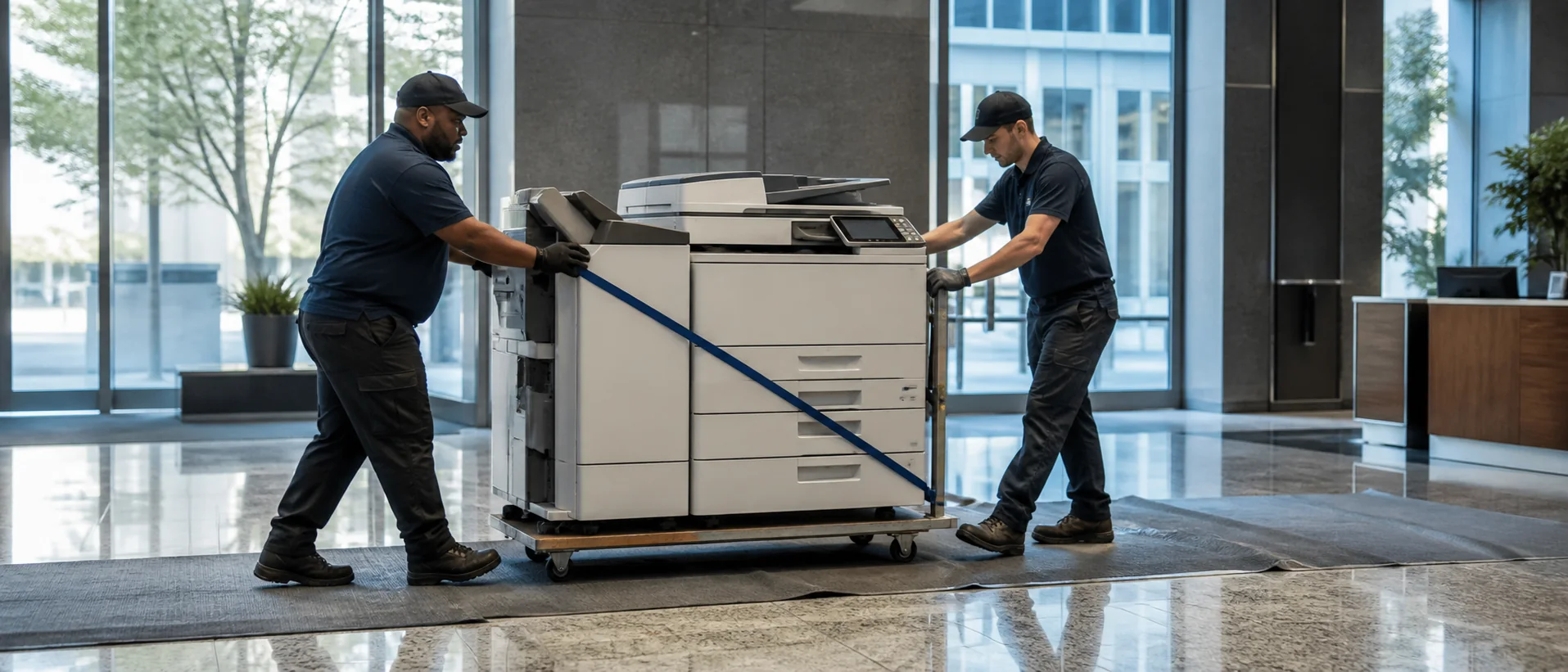
Quotes from New York office copier dealers should fit financial institutions, law firms, media and advertising companies, healthcare providers, technology businesses, real-estate organizations, government agencies, hotels, nonprofits and professional offices. Financial records, case files, creative proofs and patient forms create different security and deadline demands. A strong five-borough comparison tests actual workflows and makes high-rise access, implementation and complete recovery part of the price.
Commercial Copier Dealers in New York
Office copier dealers in New York can help you choose commercial copiers for your office size, printing needs and budget. Collect meters, ticket history and representative files from financial, legal, creative, media, clinical, technical, real-estate, hospitality, public and nonprofit users. Include statements, transaction records, case packets, proofs, patient forms, contracts, mixed scans, color presentations and confidential employee pages. Record hybrid occupancy, desktop printing and outside production.
Use the copier speed guide to connect simultaneous deadlines, scan batches and color work to useful throughput. Require exact model, controller, drawers, finisher and software. Test a normal financial, legal, creative or patient packet through secure release, OCR and retrieval.
High-rise towers, hospitals, studios, hotels and government buildings have different loading, freight-elevator, certificate and security rules. Facilities, building management, IT and frequent users should approve installation by address and floor.
Compare New York Copier Dealer Prices and Lease Options
Compare New York office copier dealers on both the purchase or lease price and the cost of ongoing service. Separate equipment price, lease total, maintenance base, included pages, overages, supplies, software, implementation and training. Add annual escalators, taxes, parking, certificates, restricted delivery, moves, data removal and return freight. The office copier pricing guide makes those property obligations visible.
Model ordinary hybrid demand plus audit, transaction, court, production, clinical, event and year-end peaks. Ask whether pages can be pooled across boroughs and how a floor or building move changes coverage. Compare copier leasing versus buying over the same useful life.
Require invoices by device and address. Keep serials, accepted options, subscriptions, minimums and notice dates together. Review cost against occupancy, color, scan success and downtime.
Local Copier Dealer Service in New York
Choose commercial copier dealers in New York with installation and support options that fit your business. IT should test authentication, secure release, OCR and approved financial, legal, clinical or media repositories. Review encryption, administrator roles, firmware, logs and sanitization. The answer on copier service contract coverage helps divide support ownership.
Ask which technicians and parts serve each building, how they gain access and who owns a fault involving the copier, identity provider or repository. Define alternate output for transactions, court, patient care, payroll, publication or guest deadlines.
References should share similar buildings, security and integrations. Ask when users could complete the whole process and whether the correction lasted. Preserve accepted files and a building-level continuity sheet.
Before installation, document freight-elevator reservations, loading limits, certificates, union or building-vendor rules and approved service entry. Pricing those details early gives every dealer the same definition of completed delivery.
Regulated teams should also define retention for stored jobs, address books, logs and device data before approval.
Get Quotes from Copier Dealers in New York
Compare commercial copiers, purchase prices and lease options for your New York business.