
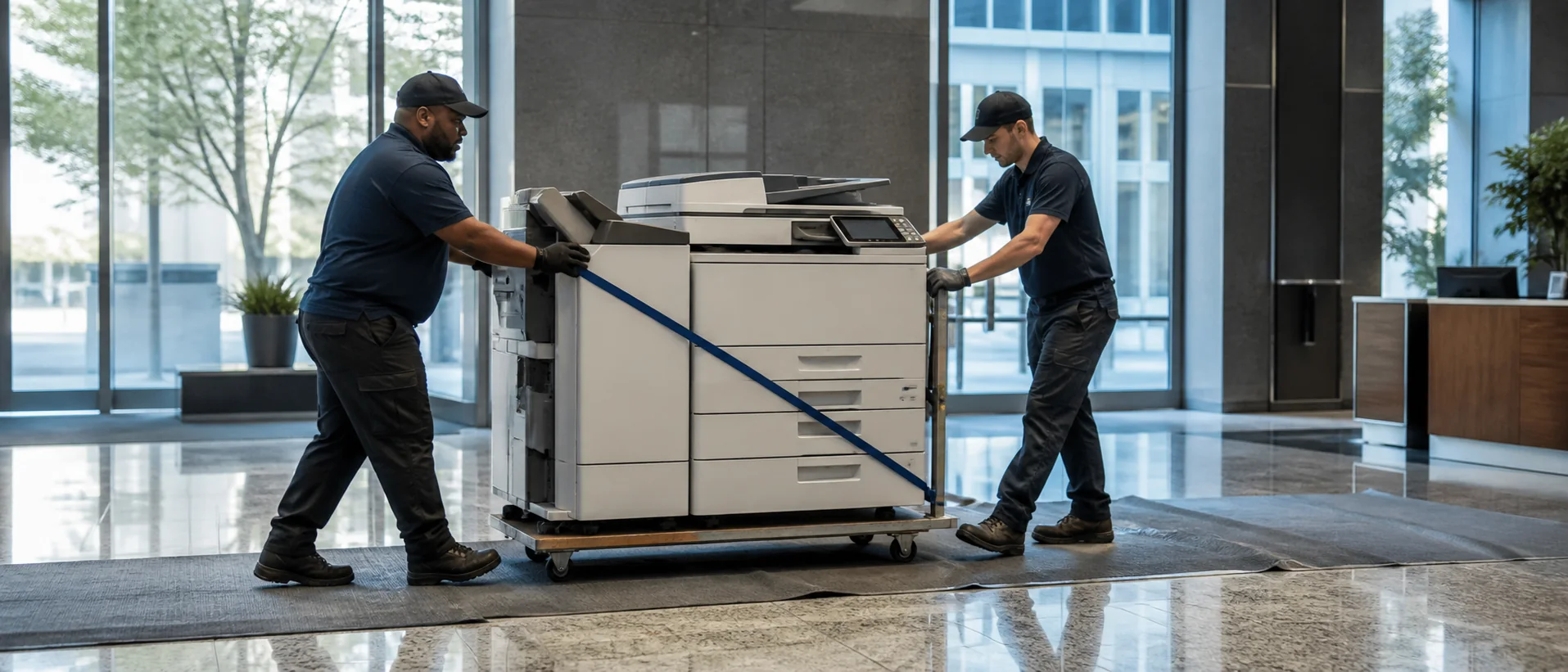
Ohio office copier dealer proposals should reflect healthcare, advanced manufacturing, automotive and aerospace, financial services, logistics, universities, government, construction and professional work across the state. Clinical records, engineering packets, shipping documents and public files place different demands on feeding, security and uptime. A statewide comparison should standardize price and controls without hiding the local access, shifts and recovery needs at each Ohio facility.
Create an Ohio copier standard from site-level evidence
Collect meters, tickets and representative files by address and department. Include patient packets, engineering drawings, quality records, production work orders, financial reports, shipping papers, academic material, public forms, mixed scans, color presentations and confidential employee pages. Record desktop and outsourced output used during deadline peaks or failures.
The office copier buyer’s guide helps define approved capacity ranges and acceptance tests. Require exact model, controller, feeder, drawers, finisher and workflow applications at every site. Test an ordinary clinical, production, financial or public packet through secure release, OCR and retrieval.
Hospitals, plants, distribution centers, campuses, towers and county offices have different docks, elevators, safety rules, credentials and service windows. Facilities, security, IT, records owners and daily users should approve installation.
Compare Ohio copier lease and purchase cost on equal terms
Separate equipment price, lease total, maintenance base, included pages, overages, supplies, software, implementation and training. Add annual increases, taxes, parking, travel zones, after-hours labor, moves, data removal and return freight. The commercial copier pricing guide keeps missing applications and local routes visible.
Model routine demand plus clinical, audit, production, shipping, enrollment and fiscal-year peaks. Ask whether pages can be pooled and how another plant, clinic or office changes service. Compare copier leasing versus buying over the same useful life.
Require sample invoices and reporting by serial, address and department. Store accepted configurations, subscriptions, minimums, escalation contacts and notice dates together, then review cost and downtime after a representative busy cycle.
Protect Ohio records and verify full workflow recovery
IT should test identity, secure print, OCR and approved clinical, technical, financial or public repositories. Review encryption, administrator privileges, firmware, logs, retention and sanitization. The copier security checklist supports protected and confidential information.
Ask providers to map technicians, common parts, credentials, hours and escalation for every site. Define alternate output for patient care, production, shipping, payroll and public deadlines. A test page is not recovery when authentication or a scan destination still fails.
References should match the proposed geography, shifts and integrations. Preserve accepted files, metadata and expected results with each asset. Price moves and additions in advance so expanding Ohio organizations can compare future obligations as carefully as the first installation.
Review the statewide record with facilities, finance, IT and local workflow owners after any material office, application or security change.
Include local managers in that review.
Price one statewide requirement without hiding local work.
Compare equipment, workflow, cost and recovery on equal terms.