
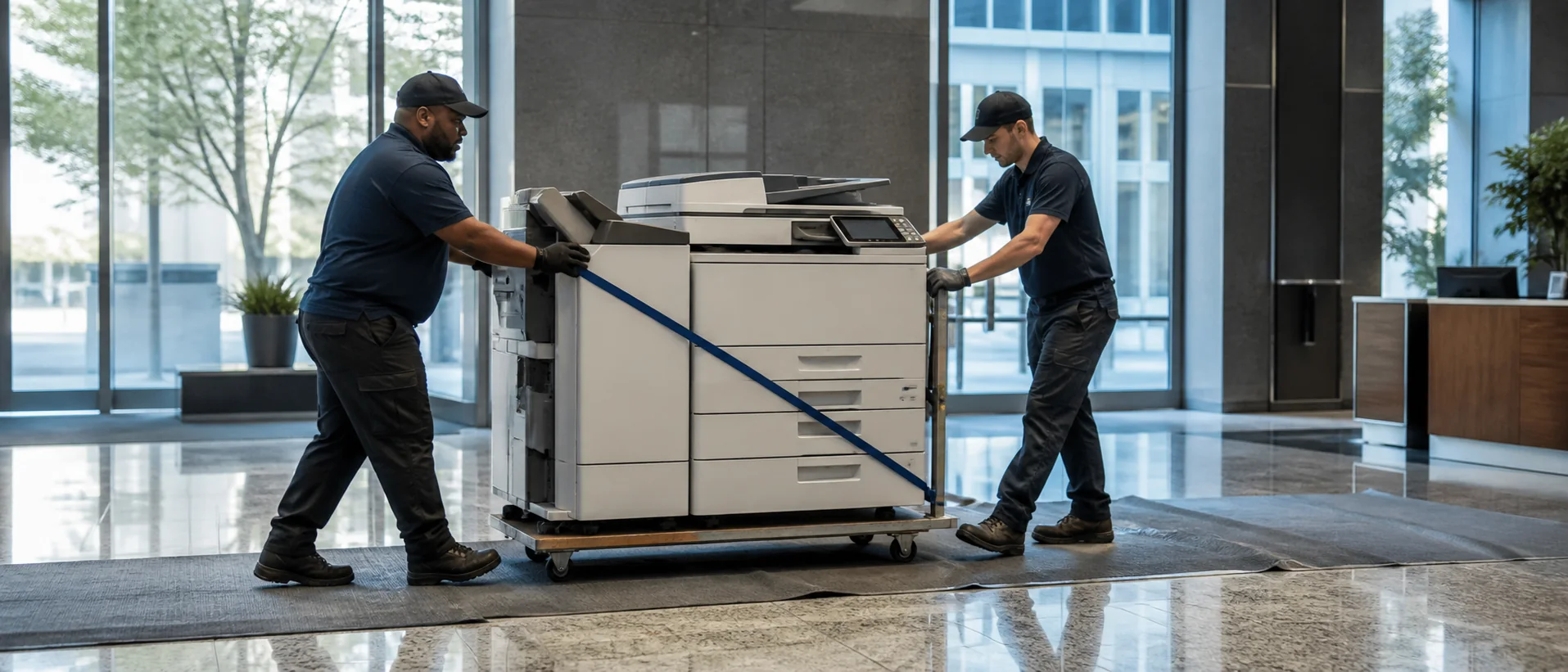
Quotes from Dayton office copier dealers should account for aerospace and defense organizations, advanced manufacturers, healthcare systems, logistics operators, universities, government agencies, construction firms and professional offices. Technical records, controlled documents, patient forms and shipping packets require different security and restoration times. A useful Montgomery County comparison tests those workflows and names practical support for every shift and facility.
Commercial Copier Dealers in Dayton
Office copier dealers in Dayton can help you choose commercial copiers for your office size, printing needs and budget. Collect meters, service history and actual files from aerospace, defense, engineering, manufacturing, clinical, freight, academic, public and professional users. Include technical manuals, controlled project records, quality packets, patient forms, shipping documents, course material, mixed scans, color presentations and confidential pages. Record work diverted during failures.
Use the A3 versus A4 copier guide to decide whether drawings, technical originals and specialty media justify full-size capacity. Require exact controller, feeder, trays, finisher and software. Test a normal technical, quality or patient packet through secure release, OCR and approved retrieval.
Secured facilities, plants, hospitals, campuses, warehouses and project offices have different docks, safety and credentials. Facilities, security, IT and daily users should approve installation.
Compare Dayton Copier Dealer Prices and Lease Options
Compare Dayton office copier dealers on both the purchase or lease price and the cost of ongoing service. Separate purchase price, lease total, service base, included pages, overages, supplies, applications, setup and training. Add annual increases, taxes, credentials, after-hours labor, relocation, sanitization and return freight. The commercial copier cost guide keeps technical workflow and local route charges visible.
Model routine demand plus program reviews, production, clinical, shipping, enrollment and fiscal peaks. Ask whether pages can be pooled and where technicians and common parts originate. Compare copier leasing versus purchase over one useful life.
Require invoices by serial and facility. Keep accepted configurations, subscriptions, minimums, escalation contacts and notice dates together, then review cost after the first demanding operating cycle.
Local Copier Dealer Service in Dayton
Choose commercial copier dealers in Dayton with installation and support options that fit your business. IT should test authentication, secure print, OCR and approved technical, controlled, clinical or academic repositories. Review encryption, administrator roles, firmware, logs, retention and data removal. The copier security checklist supports controlled and confidential information.
Ask which technicians can enter each facility and who owns a fault involving device, identity or repository. Define alternate output for program, production, patient care, freight, payroll and public deadlines.
References should match secured access, shifts and integrations. Preserve accepted files, metadata and expected results. Dayton teams should document approval for temporary equipment and require the same security, barcode and repository behavior during continuity events.
Review the access list and recovery process after staffing, network or facility changes so an urgent repair does not begin with preventable authorization delays.
Programs using controlled or contract-funded work should require billing by device, department and approved cost center. Ask how shared page pools, workflow licenses, service credits and after-hours labor appear on invoices. Keeping that commercial record beside accepted security tests gives Dayton teams stronger evidence for audits, renewals and disputes about support delivered inside restricted facilities.
Get Quotes from Copier Dealers in Dayton
Compare commercial copiers, purchase prices and lease options for your Dayton business.