
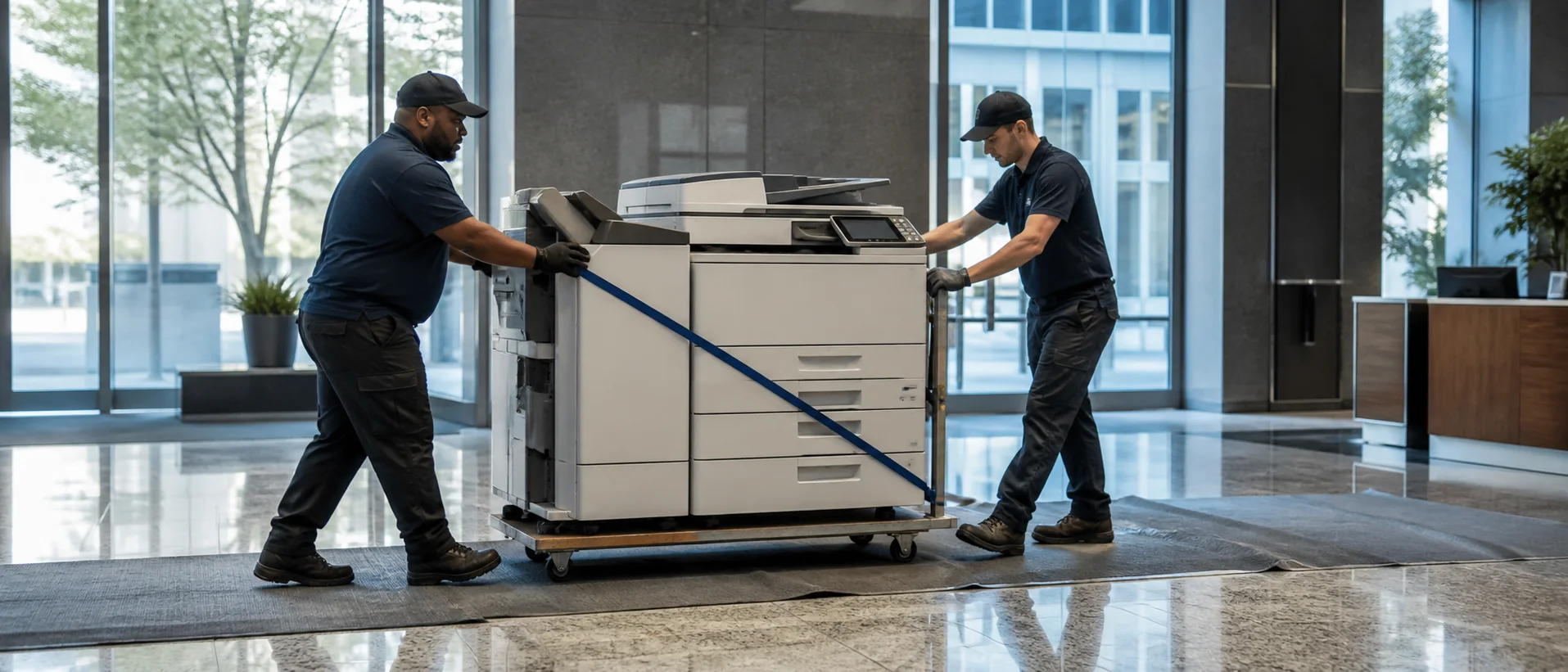
Ontario copiers for lease should be compared with purchase options using one complete logistics, manufacturing and office requirement. Ontario’s distribution centers, airport-related businesses, manufacturers, hospitality properties, retailers, research operations and professional offices depend on shipping records, administrative documents and secure scanning. A useful quote covers every building, shift and workflow rather than presenting one regional payment.
Specify an Ontario copier for logistics and commercial work
Gather meters, service history and documents from shipping, receiving, quality, purchasing, finance and customer teams. Include bills of lading, labels, work orders, invoices, legal forms, mixed-size scans and secure personnel records. Count desktop output at supervisor stations and work moved during outages.
Use the copier speed guide to connect shift peaks with feeder, processor and paper capacity. Require exact model, trays, controller, finisher and software. Test one normal shipping or compliance packet through the approved destination.
Ontario industrial and airport-area sites may have dock, security or around-the-clock access conditions unlike a downtown office. Facilities should document delivery path, power, network and technician entry before the configuration is approved.
Compare Ontario copier pricing by site and shift
Separate cash price, lease total, maintenance base, included pages, overages, software, installation and training. Add travel, annual increases, taxes, data removal and return freight. The commercial copier pricing guide helps expose incomplete bundles.
Ask whether pages are pooled across Ontario and Inland Empire facilities and whether each address receives the same response. Model normal and distribution-peak months. Compare lease and purchase over the same useful life.
Require sample invoices by asset and address. One regional bill should make inefficient machines visible, not hide them. Store notice dates and serials with the signed schedule.
Plan Ontario scanning, security and distribution continuity
IT should test secure queues, OCR, mixed originals and approved destinations. Review encryption, firmware, user roles and sanitization. The copier service contract guide identifies support worth writing.
Ask where technicians and parts are based, how shift access works and who escalates a recurring failure. Define an alternate device for shipping, customs or quality documents that cannot wait.
References should have comparable operating hours. Ask when the whole connected workflow returned, what part or setting failed and how the provider prevented recurrence.
Review tickets, pages and workarounds after the first operational peak. Keep corrected settings with the asset record so another Ontario facility can reuse the lesson.
Include a warehouse supervisor and an office user in final acceptance. The supervisor can confirm label, manifest and shift-change work; the office user can verify records and billing tasks. Together with IT, they should test the approved alternate device before an outage rather than discovering that permissions or paper settings do not follow the user.
Ask the account manager to review device utilization and service history each quarter. That rhythm makes a recurring feeder issue or underused asset visible while it can still be corrected.
Request Ontario copier pricing for the full operating footprint.
Compare one complete equipment, workflow and service requirement.