
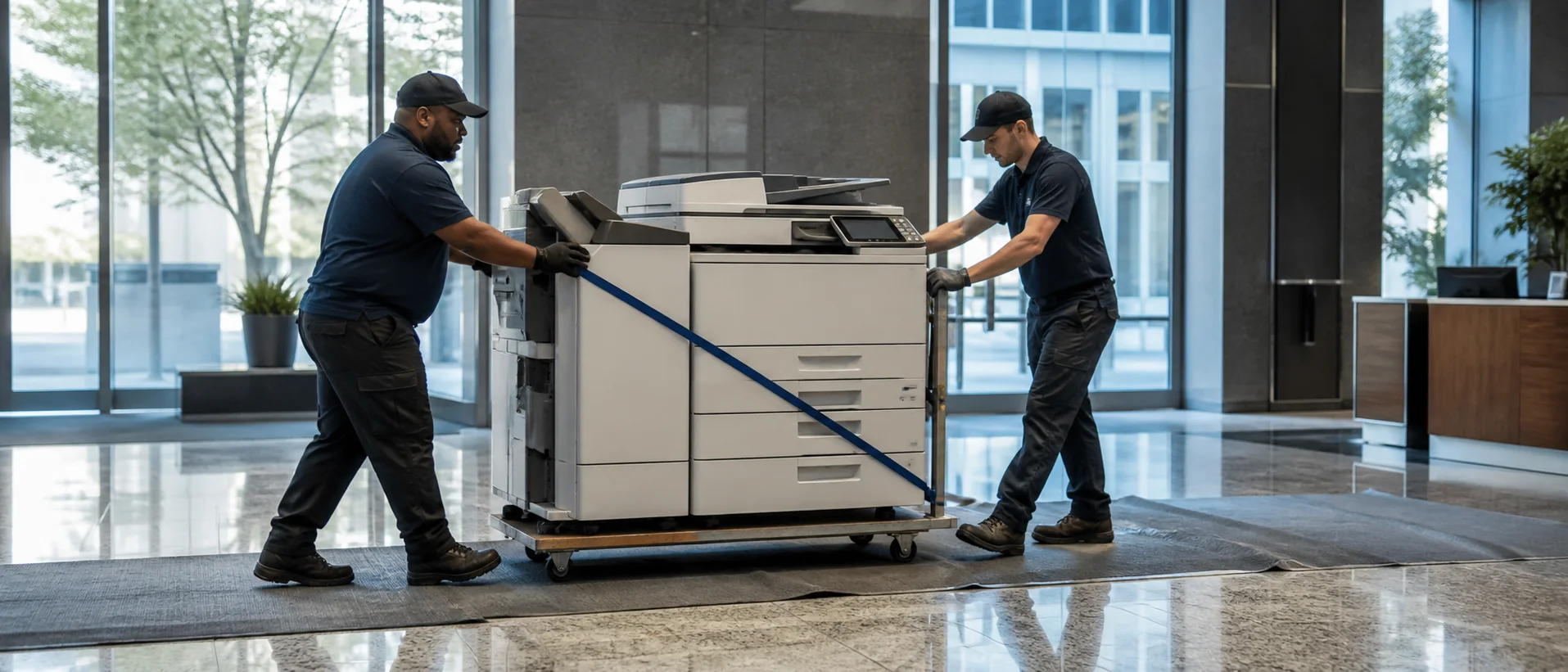
Winston-Salem copiers for lease should be evaluated beside purchase proposals for healthcare systems, universities and research groups, advanced manufacturers, financial firms, logistics operations, nonprofits, government and professional offices. Clinical records, research packets, production documents and financial files create different controls and downtime consequences. A strong Forsyth County comparison tests them before setting price.
Specify Winston-Salem copiers for clinical, academic and industrial work
Collect meters, tickets and real files from hospitals, clinics, universities, laboratories, manufacturers, banks, logistics teams, nonprofits, agencies and professional users. Include patient packets, research records, course material, quality documents, statements, shipping papers, mixed scans, color presentations and confidential pages. Record departmental printers and outsourced jobs used during failures.
Use the A3 and A4 copier guide to decide whether technical originals, booklets or specialty media justify full-size equipment. Require exact controller, feeder, drawers, finisher and software, then test a normal patient, research or production packet end to end.
Medical campuses, laboratories, plants, warehouses and public buildings have different access, safety and operating hours. Facilities, security, IT and records owners should approve installation.
Compare Winston-Salem copier prices through real deadline cycles
Separate cash price, lease total, service base, included pages, overages, supplies, workflow software, setup and training. Add annual increases, taxes, credentialing, travel, relocation, sanitization and return freight. Consult the commercial copier price guide so a missing clinical or research tool does not look like savings.
Model normal demand plus clinical, grant, enrollment, production, shipping and fiscal peaks. Ask whether pages can be pooled across Triad sites and how support changes by shift. Compare copier leasing versus purchasing over the same useful period.
Require sample invoices and reporting by serial and department. Keep options, subscriptions, minimums, escalation contacts and notice dates with each asset record.
Secure Winston-Salem records and verify practical recovery
IT should test identity, secure release, OCR and approved clinical, research, production or financial repositories. Review encryption, administrator privileges, firmware, logs, retention and data removal. The copier security checklist supports patient, research, student, technical and personnel information.
Ask which technicians and parts serve every facility and shift and who owns a fault spanning device, identity and repository. Define backup output for patient care, research, production, payroll or public deadlines.
References should match access and integrations. Keep accepted files, metadata and expected results so a repair is judged by completed work, not simply a printed test sheet.
Hospitals, laboratories and manufacturers should define the difference between mechanical uptime and usable workflow recovery. A copier that prints a test page may still fail authentication, barcode recognition, metadata capture or an approved repository connection. Require the provider to restore and verify the whole accepted task, record the correction and retain the result. This makes repeat-fault escalation faster and gives procurement evidence for service-credit reviews.
Review that evidence with clinical, research, production and information-security owners each quarter.
Price one complete Winston-Salem copier requirement.
Compare equipment, workflow, cost and recovery on equal terms.